Wonders of Israel | This is Israel, a Land of Innovation, Contrast, and Timeless Beauty
This article is an expanded, reader-friendly companion to the original video created by its creator. Below you’ll find a guided tour through Israel’s most striking sites, innovations, cultural features, and travel tips — presented in concise bullet points so you can absorb the essentials quickly and return later for deeper detail. The narrative follows the same energy and sense of wonder from the original production while adding context, practical notes, and answers to common questions about visiting this extraordinary country.
Table of Contents
- Innovation & Survival 🌊
- Why Israel’s Small Size Belies Big Impact 🌍
- Jerusalem’s Old City 🕍
- Dead Sea — Float, Mud, and the Lowest Point on Earth 🧂
- Tel Aviv — Beaches, Bauhaus, and the Startup Nation 🌇
- Masada — Fortress, Sunrise, and a Story of Resistance 🌄
- Nazareth — The Annunciation and Everyday Faith ✝️
- Haifa & the Bahá'í Gardens 🌺
- Jezreel Valley — Israel’s Breadbasket 🌾
- Golan Heights — Wines, Winters, and Wide Vistas 🍷
- Safed (Tzfat) — Mysticism and Artistic Light 🔯
- Acre (Akko) — Crusader Fortresses and Secret Tunnels 🏰
- Negev Desert & Ramon Crater — Vastness and Geology 🏜️
- Eilat — The Red Sea’s Coral Kingdom 🐠
- Culture, People & Curiosities 🧭
- Practical Travel Tips ✈️
- FAQ ❓
- Final Thoughts ✨
Innovation & Survival 🌊
- Necessity as the mother of invention: – Israel’s environment and geopolitical realities have turned innovation into more than a buzzword — it’s a national imperative. From water shortages to the need for robust defense systems, technological solutions shape everyday life and national security.
- Desalination on a national scale: – Faced historically with limited fresh water, Israel developed one of the world’s largest desalination systems. These plants take seawater and convert it into potable water, supplying millions and stabilizing the country’s water security. – The shift to desalinated water has affected agriculture, urban planning, and resilience during droughts. Modern irrigation and water management complement desalination to maximize every liter.
- Real-time protection: the Iron Dome: – In a context marked by recurring security threats, Israel developed the Iron Dome — a cutting-edge missile defense system that intercepts short-range rockets and projectiles in flight. – The system’s rapid detection and interception capabilities protect cities and civilian life in real time, changing the calculus of safety for many communities.
- High-tech economy and global innovation hub: – These applied technologies — in defense, water, agriculture, and more — helped build a high-tech economy. Israel’s reputation as a center of startup creativity and focused R&D has attracted talent and investors worldwide.
Why Israel’s Small Size Belies Big Impact 🌍
- Economic facts: – Israel’s GDP tops in the hundreds of billions of US dollars despite its small territorial footprint, reflecting strong productivity, technology exports, and services. – The country’s modern economy contributes to global technological ecosystems through startups, cybersecurity firms, agricultural tech, and medical innovation.
- Demographic and cultural complexity: – Israel hosts a diverse population: Jews, Arabs, Christians, Druze, and sizable immigrant communities (including many from the former Soviet Union). – This mosaic results in multiple languages and cultural expressions visible in everyday life, cuisine, music, and business.
- Social characteristics that shape society: – Israel ranks high in higher-education participation relative to population size. A strong emphasis on education underpins its technological advances. – Military service includes both men and women in large numbers, influencing social cohesion, civic responsibility, and many professional networks.
Jerusalem’s Old City 🕍
- Time capsule of faith and history: – The Old City is a dense mosaic of sites sacred to Judaism, Islam, and Christianity. Each quarter (Jewish, Muslim, Christian, Armenian) packs centuries of history into narrow streets and layered stone.
- Western Wall (Kotel): – A remaining portion of the Second Temple complex, it draws millions who come to pray, reflect, and place written petitions between its stones. – The wall’s spiritual resonance is felt by visitors of different backgrounds; it’s as much an emotional space as a historical one.
- Dome of the Rock: – The golden dome, visible across Jerusalem, dates back to the 7th century and is one of Islam’s most venerated sites. It houses a rock regarded in Islamic tradition as the point of the Prophet Muhammad’s ascension. – The same rock has significance in Jewish tradition — associated with the binding of Isaac — which exemplifies Jerusalem’s layered religious meanings.
- Church of the Holy Sepulchre and Via Dolorosa: – The basilica marks the sites associated with Jesus’ crucifixion and burial in Christian tradition. Pilgrims trace the Via Dolorosa, connecting modern believers with millennia of devotion.
- Why visit: – Beyond religious importance, Jerusalem’s Old City is a place where rituals, markets, local disputes, and everyday commerce happen alongside the profound. It is one of the most intense pilgrimage destinations in human history.
Dead Sea — Float, Mud, and the Lowest Point on Earth 🧂
- Geographical extremes: – The Dead Sea sits more than 400 meters below sea level — the Earth's lowest exposed land point. This unique elevation contributes to its distinct climate and mineral profile.
- Hyper-saline waters: – With salinity almost ten times that of the world’s oceans, the Dead Sea’s buoyancy makes floating effortless. Visitors often describe it as surreal to lay back and read a magazine while literally floating.
- Therapeutic minerals & mud: – These waters are rich in magnesium, calcium, potassium, and other minerals. Black detritus mud from the basin is famed for its skin benefits and is used in centuries-old beauty and therapeutic rituals. – Cleopatra is often cited in historical anecdotes as valuing the rejuvenating effects of the area — part myth, part testament to longstanding appreciation of Dead Sea resources.
- Scenery — otherworldly contrasts: – The stark desert and craggy mountains surrounding the reflective saline surface create landscapes that feel almost extraterrestrial. Light across the water offers intense colors at sunrise and sunset.
Tel Aviv — Beaches, Bauhaus, and the Startup Nation 🌇
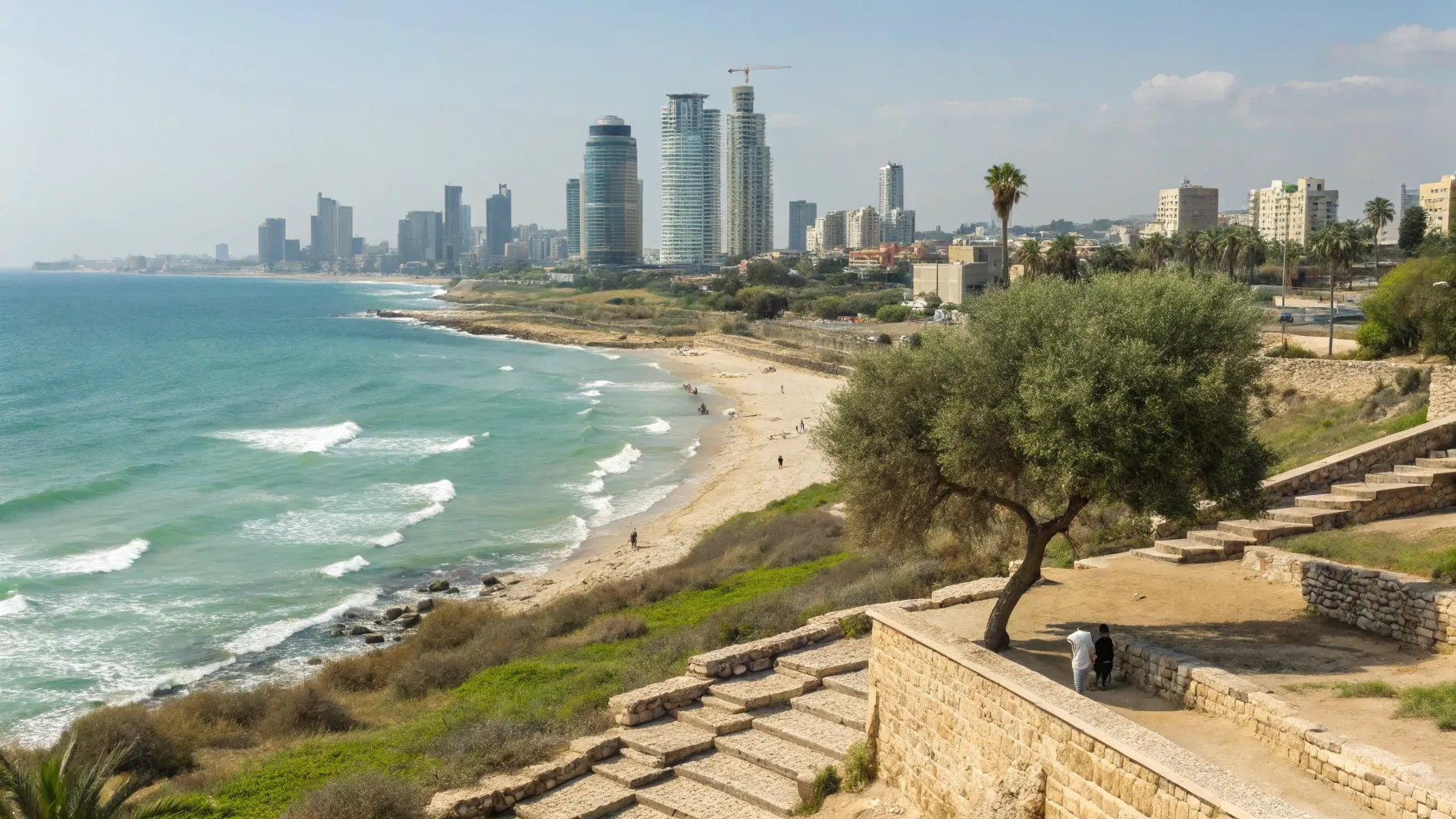
- A modern, sleepless city: – Tel Aviv is energetic 24/7: long Mediterranean beaches by day, and a lively nightlife of bars, clubs, and restaurants by night. – The urban vibe is cosmopolitan, youthful, and intensely social. Cafés spill onto sidewalks, and the coastline is a daily hub for locals and travelers.
- Startups and technology: – As a core engine of Israel’s “startup nation” reputation, Tel Aviv hosts thousands of startups and technology firms. The city attracts international talent and venture capital, making it a global tech hub. – Co-working spaces, accelerators, and networking events give Tel Aviv an ecosystem reminiscent of other tech capitals but with a distinctive Mediterranean cultural flavor.
- The White City and Bauhaus heritage: – Over four thousand buildings in the Bauhaus style cluster in a district now recognized as a UNESCO World Heritage Site. Constructed mainly in the 1930s, these buildings reflect modernist ideals and European immigrant influences. – Walking the White City reveals how modern architectural visions were adapted to local light, climate, and urban life.
Masada — Fortress, Sunrise, and a Story of Resistance 🌄
- Perched fortress above the Dead Sea: – Masada rises from the Judean desert roughly 600 meters above the Dead Sea — a dramatic cliff-top stronghold with panoramic desert views.
- History of resistance (AD 73): – During the First Jewish–Roman War, about nine hundred Jewish defenders held Masada against Roman siege tactics. The site has become a powerful symbol of resistance and collective memory.
- Ruins and archaeology: – The site includes palaces, cisterns, storerooms, and Roman-style baths — revealing a sophisticated and organized settlement that could maintain life on the plateau.
- Sunrise hike and the Snake Path: – Many visitors scale the snake path at dawn to watch sunrise illuminate the Dead Sea and desert — an iconic experience marrying natural beauty with historical reflection. – For those preferring comfort, a cable car carries visitors to the top, making Masada accessible to a wide range of travelers.
Nazareth — The Annunciation and Everyday Faith ✝️
- Christian pilgrimage and living tradition: – Nazareth is revered as the town where Jesus grew up. Its streets evoke biblical narratives and daily life in a place where faith and community interweave.
- Basilica of the Annunciation: – The basilica marks the place where, according to tradition, the angel Gabriel announced to Mary that she would bear Jesus. It’s one of the largest churches in the Middle East and displays mosaics and artworks representing global Christian devotion.
- Church of Saint Joseph: – This simpler church is traditionally identified with Joseph’s carpentry workshop — an evocative site linking the sacred to ordinary life.
- Local culture and markets: – Nazareth blends pilgrimage activity with local markets, processions, and seasonal religious celebrations. It’s a great place to witness devotion paired with everyday commerce: spices, foods, crafts, and souvenirs.
Haifa & the Bahá'í Gardens 🌺
- Coexistence on Mount Carmel: – Haifa showcases Jewish, Christian, Muslim, and Bahá'í communities coexisting in a city that blends cultural influences across neighborhoods.
- Bahá'í Gardens — terraces of serenity: – The Bahá'í complex features nineteen terraces cascading down Mount Carmel. Its impeccably designed gardens are a UNESCO World Heritage Site and a magnet for visitors seeking beauty and calm.
- Port city and cultural life: – Haifa’s port is among the country’s most important. The city also supports museums, theaters, and a lively contemporary cultural scene.
Jezreel Valley — Israel’s Breadbasket 🌾
- Fertile agricultural heartland: – The Jezreel Valley is one of Israel’s most productive regions. Modern irrigation and precision agriculture have turned it into a reliable source of fruits, vegetables, and grains.
- Water-smart agriculture: – Advanced irrigation techniques make efficient use of water in a semi-arid region, maximizing yields while conserving scarce resources.
- Deep biblical and historical roots: – The valley appears in multiple biblical accounts and served as a stage for historic battles and events — think of stories involving Deborah and Gideon. The landscape resonates with centuries of human narrative layered over agricultural innovation.
Golan Heights — Wines, Winters, and Wide Vistas 🍷
- Unique terroir and winemaking: – The Golan’s volcanic soils, elevation, and climate create distinctive conditions for vineyards. Local wineries produce award-winning wines that increasingly attract oenophiles. – Vineyard tours and tastings are popular ways to learn about grape varieties and production methods while enjoying panoramic views.
- Mount Hermon — Israel’s winter resort: – The Golan region is one of the few places in Israel where snowfields and skiing are possible. Mount Hermon becomes a winter sports destination, offering dramatic contrast to the country’s coastal warmth.
- Year-round outdoors: – Hikers and nature-lovers visit the Golan to explore wildlife, scenic trails, and lookout points with sweeping vistas into northern Israel and beyond.
Safed (Tzfat) — Mysticism and Artistic Light 🔯
- Birthplace of Kabbalah: – Safed’s reputation as a seat of Jewish mysticism attracts scholars and spiritual seekers who come to study and meditate in its historical synagogues.
- Artist quarter and spiritual inspiration: – Narrow lanes host art galleries and studios where painters and sculptors express the city’s mystical and natural influences. Local art often reflects the spiritual intensity and rugged Galilean landscapes.
- Calm, elevation, and reflection: – Perched on Galilean heights, Safed offers quiet streets and panoramic views — an environment conducive to introspection and artistic production.
Acre (Akko) — Crusader Fortresses and Secret Tunnels 🏰
- UNESCO World Heritage port city: – Acre preserves a complex of fortifications and historic fabric dating to Crusader times. Its walls, harbors, and citadel tell of military strategy, trade, and cultural exchange.
- Underground tunnels and echoes of war: – Secret passages and vaulted corridors reveal defensive ingenuity. Walking them evokes the stratified history of conquest and protection.
- Market life and lingering atmosphere: – Acre’s lively markets and coastal streets combine historic atmosphere with contemporary life — spices, textiles, and street foods mingle with ancient stone.
Negev Desert & Ramon Crater — Vastness and Geology 🏜️
- Dominant, dramatic landscape: – The Negev covers more than 60% of the country, ranging from arid plains to sculpted rock formations and canyons. It’s a study in geological time and human adaptation.
- Ramon Makhtesh (Ramon Crater): – The Ramon crater, a makhtesh, spans roughly 40 kilometers in length and up to 10 kilometers across, exposing rock layers that record millions of years of Earth’s history. – This unique erosion feature offers a geological window: look for color bands, fossil-bearing strata, and striking rock formations.
- Archaeology and ancient routes: – Nabataean caravan trails, fortress ruins, and desert archaeology dot the Negev — reminders that trade, travel, and settlement adapted to harsh conditions over millennia.
Eilat — The Red Sea’s Coral Kingdom 🐠
- Southern subtropical gateway: – Eilat sits at Israel’s southern tip along the Red Sea and enjoys a year-round warm climate — ideal for beachgoers and underwater explorers.
- World-class snorkeling and diving: – Coral reefs teem with colorful fish, corals, and turtles. Snorkeling, diving, and glass-bottom boat tours provide easy access to this underwater biodiversity.
- Dolphin Reef and marine encounters: – Dolphin Reef offers the opportunity to swim near dolphins (in their natural environment) — a memorable, family-friendly encounter that’s regulated to support conservation.
- Nightlife, recreation, and relaxation: – Eilat balances outdoor activities with a lively nightlife scene; restaurants and bars stay open late, and the city draws sun-seeking tourists year-round.
Culture, People & Curiosities 🧭
- A multilingual, multicultural society: – Hebrew and Arabic are principal languages; English is widely used in tourism, business, and academia. Many immigrant languages from the former Soviet sphere and elsewhere also shape daily life.
- High educational attainment: – The country has a high proportion of people with tertiary education relative to its population, supporting robust research, entrepreneurship, and specialized industries.
- Mixed-gender military service: – Men and women serve together in many military roles, which contributes to a distinctive social dynamic and professional networking across genders.
- Tradition vs. modernity: – Israel is defined by contrast: ancient holy sites stand beside gleaming startups; desert vistas neighbor cultivated valleys; religious observance coexists with liberal urban centers. – These juxtapositions make travel here a continuous surprise — every day can bring a different facet of history or contemporary life.
- Economy and global presence: – With a modern, export-oriented economy, the country’s technological innovations often enter global markets, from medical devices to software security.
Practical Travel Tips ✈️
- Best time to visit: – Spring (March–May) and autumn (September–November) offer pleasant temperatures and comfortable touring conditions across most regions. – Summers can be hot, especially inland and in the Negev; winters are mild on the coast but can bring snow to Mount Hermon.
- Safety and situational awareness: – Many tourists travel safely across the country, but routine awareness of local news and regional advisories is wise. Stay informed about local conditions, especially near borders or in times of tension.
- Religious and cultural sensitivity: – Dress respectfully when visiting holy sites (shoulders and knees covered in many places); follow signage and guidance at religious locations. – During Shabbat (sundown Friday to sundown Saturday), many businesses and public transport options modify schedules in Jewish-majority areas — plan accordingly.
- Transportation tips: – Israel’s bus network is extensive; intercity trains serve major routes. Renting a car gives flexibility for outlying sites (Negev, Golan, and Jezreel). – Taxis and ride apps operate in urban areas; negotiate or confirm fares where meters aren’t used.
- Visit planning: – For sunrise at Masada, start early and bring water and sun protection. For the Bahá'í Gardens, check visiting hours and guided-access rules. For Dead Sea bathing, be mindful about water in the eyes and avoid shaving immediately before visiting (salt stings).
- Health and environment: – If planning to dive or snorkel in Eilat, purchase or bring reef-safe sunscreen to protect coral ecosystems. Stay hydrated across desert areas and respect local conservation rules.
- Currency and payments: – The local currency is the shekel. Credit cards are widely accepted in urban centers; carry cash for some small-market purchases.
FAQ ❓
- Q: Is it safe to travel to Israel? – A: Many travelers visit safely every year. Exercise standard travel caution, check current advisories, and follow local guidance. Avoid demonstrations and areas flagged by local authorities. Staying informed is the best safety measure.
- Q: What is the best way to experience the Dead Sea? – A: Go early morning or late afternoon to avoid peak sun. Wear water shoes for rocky entries, keep water out of your eyes and mouth, and carry freshwater to rinse off. Don’t shave immediately before entering the water, and avoid submerging your head.
- Q: When should I climb Masada? – A: Sunrise is iconic. For comfort, bring good shoes, water, and a headlamp or flashlight if hiking before dawn. If you prefer less exertion, take the cable car to the top.
- Q: How many days do I need to see the highlights? – A: A compact, intensive trip might hit Jerusalem, Tel Aviv, Masada, and the Dead Sea in 4–6 days. For deeper exploration — Haifa, Acre, Golan, Safed, Negev, and Eilat — plan 10–14 days to include relaxed travel between regions.
- Q: Do I need a guide for archaeological and religious sites? – A: Guides significantly enhance experience at complex sites (Jerusalem Old City, Masada, Akko, Nazareth). They provide historical context and help navigate logistics and etiquette.
- Q: What is the tipping culture? – A: Tipping is customary in restaurants (around 10–15% where service charges aren’t included). Taxis, guides, and hotel staff appreciate small tips for good service.
Final Thoughts ✨
- Contrast and continuity: – Israel is a nation of striking contrasts: ancient stones and modern startups, desert silence and bustling city beaches, deep religious devotion and secular creativity. These juxtapositions create unforgettable travel experiences.
- An invitation to curiosity: – Whether you’re drawn by spiritual history in Jerusalem, the science and ingenuity behind modern infrastructure, the otherworldly experience of the Dead Sea, or the vibrant energy of Tel Aviv, Israel invites travelers to look deeper, ask questions, and connect with living traditions.
- Plan, respect, and explore: – Travel thoughtfully: plan your itinerary around site access and cultural rhythms, respect local customs at religious sites, and balance iconic attractions with lesser-known corners for a fuller experience.
- Continue the journey: – If this piece piqued your interest, consider diving into specific regions — the Golan’s vineyards, the Negev’s geological wonders, or Safed’s spiritual arts — each area offers a distinct chapter in Israel’s multifaceted story.