Inside Iran: The Extraordinary Beauty Hidden Beyond the Headlines
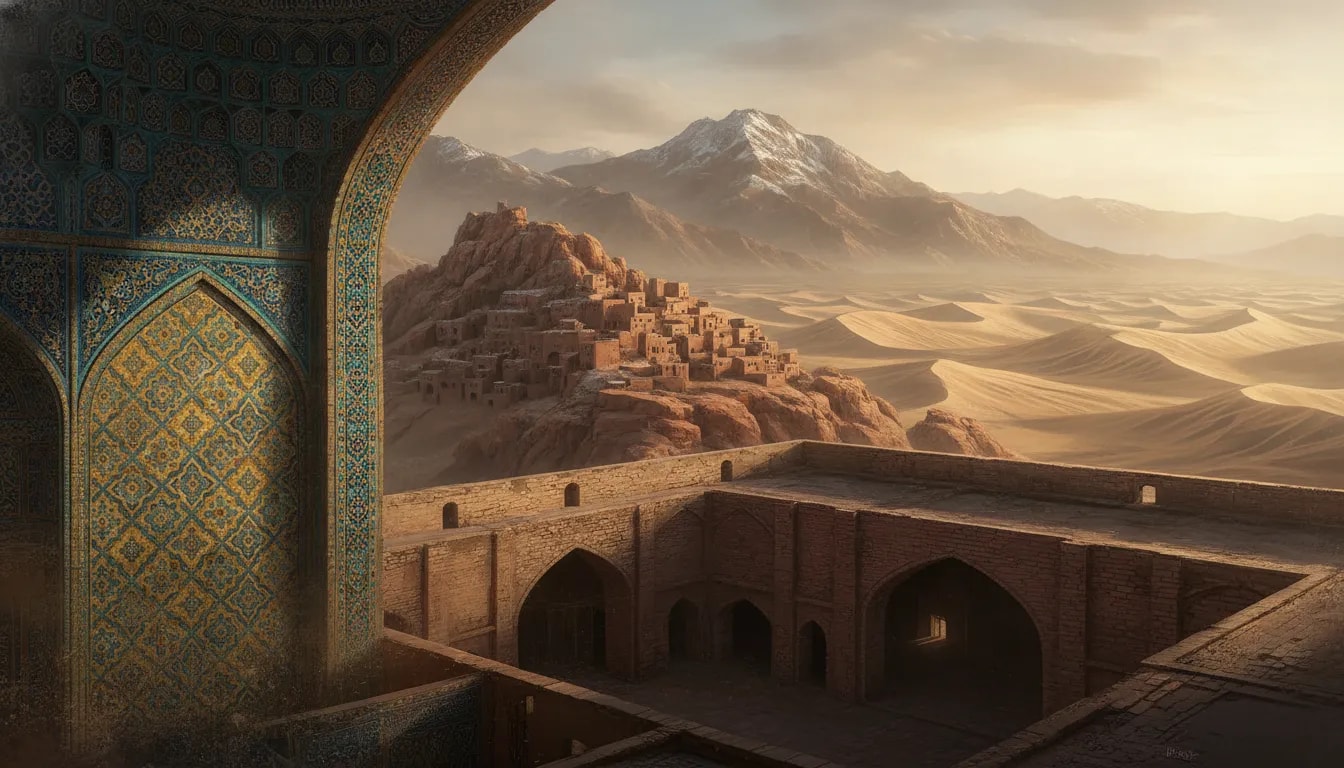
Iran is not a place that fits inside a headline. It is a land where ancient palaces rise from sun-baked plains, mountain villages are carved directly into volcanic rock, desert winds sculpt landscapes that look almost extraterrestrial, and poetry is treated with the reverence often reserved for precious metals.
Between the Caspian Sea and the Persian Gulf, Iran holds one of the world’s oldest continuous civilizations. Its scale is astonishing, its cultural layers are deep, and its contrasts are everywhere.
- In one direction: snowy mountains, ski slopes, forests, and green valleys.
- In another: the blistering Lut Desert, among the hottest landscapes on Earth.
- In its cities: tiled mosques, bazaars, museums, historic bridges, gardens, and modern towers.
- Along its southern coast: mineral-rich islands painted in red, orange, yellow, and violet.
With a population of roughly 84 million people and a rich ethnic mix including Persians, Azeris, Kurds, and Baloch communities, Iran is not one single story. It is a vast cultural mosaic shaped by ancient empires, Islamic architecture, Zoroastrian heritage, trade routes, art, food, ritual, and resilience.
🌍 Why Iran Feels Like a World of Its Own
Iran is one of the largest countries in the world and a geographical colossus of the Middle East. It stretches from the Caspian coast in the north to the Persian Gulf in the south, with landscapes that shift dramatically over relatively short distances.
- Mount Damavand: Asia’s tallest volcano, rising above the Alborz Mountains.
- Dasht-e Lut: a vast desert of yardangs, salt flats, heat, and sculpted stone.
- Persian Gulf islands: coastal landscapes of caves, cliffs, fishing villages, and vividly colored soil.
- Historic cities: places where urban life unfolds among palaces, mosques, bazaars, gardens, and centuries-old homes.
- UNESCO heritage: Iran is home to 26 UNESCO World Heritage Sites, a remarkable concentration of cultural and natural landmarks.
The country’s economy is often associated with oil and natural gas, but its identity is equally tied to pistachios, handwoven carpets, domestic travel, historic craftsmanship, and food traditions shaped over millennia.
Its cuisine alone is a map of Persian memory. Saffron rice, kebabs, slow-cooked stews, walnuts, pomegranate, rosewater, and fragrant herbs turn ordinary meals into something ceremonial.
A Few Cultural Details That Reveal Iran’s Character
- Tea is a ritual: it is served with care, conversation, and a sense of hospitality.
- Tarof matters: this deeply rooted code of courtesy can appear elaborate to newcomers, but it reflects respect and generosity in everyday interaction.
- Architecture is intelligent: wind towers, underground water channels, shaded courtyards, and thick adobe walls show how Persian builders mastered life in difficult climates.
- Poetry lives in daily life: poets such as Hafez and Saadi remain cultural touchstones, especially in Shiraz.
The deeper one goes, the clearer it becomes: Iran’s luxury is not merely about grand hotels or exclusive access. Its real luxury is depth. It is the feeling of standing inside history, tasting ingredients perfected over generations, and finding a living culture behind every carved doorway and tiled arch.
🏛️ Persepolis: The Monumental Heart of Ancient Persia
Few places convey the scale of ancient Persia as powerfully as Persepolis. Located around 60 kilometers from Shiraz, this archaeological site was founded by Darius the Great in the sixth century BCE and expanded by rulers including Xerxes and Artaxerxes.
For centuries, Persepolis was a political and ceremonial center of the Achaemenid Empire, a realm that stretched from India to the Mediterranean. The ruins still carry that imperial confidence.
- Colossal columns rise from the desert plain.
- Stone staircases lead toward ceremonial spaces and grand halls.
- Bas-reliefs show ambassadors and delegates bearing tributes.
- Every carved figure, garment, animal, and procession was designed to communicate power, order, diplomacy, and cultural reach.
Persepolis does not feel like a distant museum piece. Its ruins preserve enough scale and detail to make the imagination work effortlessly. The carved processions still seem to move. The staircases still direct the eye upward. The columns still suggest the vast ceremonial halls that once stood here.
At sunset, when the Zagros Mountains darken against the horizon, the site becomes almost cinematic. Shadows slide across the bas-reliefs, and the stones appear to hold stories that have simply been waiting for silence.
UNESCO recognized Persepolis as a World Heritage Site in 1979. For further historical context, explore UNESCO’s Persepolis listing.
🕌 Esfahan: Half the World in One City
Esfahan has long been called “Half the World,” and the name makes sense the moment its architecture comes into view. This is a city where art is not confined to galleries. It lives in public squares, bridges, courtyards, carpets, mosques, and quiet tea houses.
At its center lies Naqsh-e Jahan Square, built in the early 17th century when Shah Abbas made Esfahan the Safavid capital. Its name translates as “Image of the World,” which feels less like exaggeration than an architectural statement.
- Imam Mosque: a monumental masterpiece of Islamic architecture.
- Sheikh Lotfollah Mosque: known for its delicate elegance and refined tilework.
- Ali Qapu Palace: a Safavid palace overlooking the square.
- Grand Bazaar: a place where trade, craft, color, and history meet.
The square is among the largest of its kind in the world, but it never feels empty. It is held together by proportion, arches, gardens, water, and the cool geometry of Persian design. Its UNESCO status, also recognized in 1979, reflects the city’s extraordinary importance in the history of urban planning and architecture.
Along the Zayandeh River, historic bridges such as Si-o-se-pol bring another layer of beauty. With 33 arches, the bridge transforms an ordinary crossing into a place to pause, listen, and gather. Beneath its vaulted spaces, traditional music and conversation have created a social tradition that has endured for generations.
Esfahan is elegance without noise. It is hidden courtyard cafés, art galleries, handmade carpets, and details so precise they can feel almost mathematical.
🌿 Kashan: Courtyards, Rose Gardens, and Desert Refinement
Kashan sits between Iran’s central mountains and the desert, where privacy, water, light, and shade have shaped a distinctive architectural language. Its historic homes were built by wealthy merchant families during the Qajar era, mostly between the 18th and 19th centuries.
Walking through Kashan’s old neighborhoods means moving through narrow lanes that lead to unexpectedly grand interiors. Behind modest exterior walls lie colorful windows, cool courtyards, reflecting pools, carved ceilings, and gardens designed to create peace in the desert heat.
- Tabatabaei House: a residential palace of stained glass, ornamental rooms, and internal courtyards.
- Borujerdi House: known for elaborate decoration and aristocratic atmosphere.
- Sultan Amir Ahmad Bathhouse: a 16th-century hammam with a domed roof punctured by circular skylights.
- Fin Garden: a UNESCO-listed Persian garden where water channels run among cypress trees and rose bushes.
The Sultan Amir Ahmad Bathhouse is not simply beautiful. Its design is a lesson in environmental intelligence. The filtered sunlight creates an otherworldly interior, while its underground heating system helped keep water and rooms warm long before modern climate control.
Kashan is the kind of place that proves beauty can be practical. Water, ventilation, shade, and privacy are not decorative afterthoughts. They are the foundations of the city’s architecture.
🏙️ Tehran: Iran’s Fast-Paced, Many-Layered Capital
Tehran is where tradition and modernity meet without apology. It is Iran’s political and economic heart, home to more than 9 million people, broad avenues, art institutions, mountain views, traffic, cafes, bazaars, and a skyline that keeps pushing upward.
- Milad Tower: rising more than 400 meters, it dominates the modern skyline.
- Golestan Palace: a UNESCO-listed palace complex of mirrors, frescoes, gardens, and Qajar-era splendor.
- Grand Bazaar: more than 10 kilometers of commercial energy, scented with saffron, pistachios, leather, and spice.
- Darband and Tajrish: northern districts where tea houses, cafes, galleries, and mountain paths converge.
- Tochal: ski slopes reached in about 30 minutes from the city center.
Tehran is often surprising because it resists the clichés placed upon it. It can move from contemporary art to ancient artifacts, from city lights to mountain air, from palace gardens to a museum dedicated to Persian carpets, all in the course of a day.
The National Museum of Iran, the Museum of Contemporary Art, and the Carpet Museum offer a clear reminder that Persian sophistication is not locked in the past. It continues to evolve.
🏰 Bam Citadel: A Desert City Built from Earth
In southeastern Iran, the Citadel of Bam rises from the desert like a city made from the color of the earth itself. Built largely from raw adobe, it is considered the world’s largest adobe architectural complex.
The citadel’s origins reach back to the Achaemenid period, around the sixth century BCE. It flourished along the Silk Road and reached its height between the 7th and 17th centuries as a commercial, military, and residential center.
- Scale: more than 180,000 square meters.
- Defenses: high walls, watchtowers, and strategic planning.
- Infrastructure: underground qanats, or water channels, that sustained life in an arid environment.
- Urban life: a governor’s palace, market areas, homes, gardens, and shaded spaces.
The 2003 earthquake devastated much of Bam, leaving behind deep physical scars. Yet restoration efforts, supported internationally, have gradually brought parts of the citadel back to life. That process is part of Bam’s story now. The site stands not only for ancient Persian engineering, but also for endurance.
Its corridors, towers, and mud-brick walls make clear that desert architecture was never primitive. It was adapted, deliberate, resilient, and deeply connected to the climate around it.
🏜️ The Lut Desert: Iran’s Otherworldly Wilderness
The Lut Desert, also known as Dasht-e Lut, is one of Iran’s most extreme and unforgettable landscapes. It stretches across more than 50,000 square kilometers in southeastern Iran, covering areas of Kerman, Sistan, and Balochistan provinces.
There is little softness here. The Lut is an expanse of heat, wind, stone, and distance. NASA satellite sensors recorded a ground temperature of 70 degrees Celsius here in 2005, one of the highest temperatures ever measured on Earth.
- Yardangs: massive ridges of sand and stone shaped by wind over thousands of years.
- Extreme conditions: scorching temperatures, minimal vegetation, and vast exposed horizons.
- Scientific interest: microorganisms have been found surviving in its harsh environment, making the desert relevant to research into life in Mars-like conditions.
- Adventure: 4×4 routes, sunrise hikes, remote camps, and exceptionally clear night skies.
The Lut Desert became a UNESCO World Heritage Site in 2016. More information is available through UNESCO’s Lut Desert profile.
Its appeal is not comfort. It is scale. The desert makes human concerns feel very small, and that is precisely the point. Here, nature speaks in geological time.
🌊 Qeshm Island: Canyons, Salt Caves, and Geological Wonder
Qeshm, the largest island in the Persian Gulf, is a place where erosion seems to have become an artist. Wind, water, salt, and time have carved it into a landscape of narrow canyons, strange rock forms, caves, lagoons, and fishing villages.
- Chahkooh Canyon: steep, winding walls cut by water and wind, with sunlight painting shifting patterns across the stone.
- Namakdan Salt Cave: extending more than 6,000 meters and considered among the world’s longest salt caves.
- Valley of the Stars: a field of eroded formations tied to local stories of falling meteors.
- Geological preservation: part of a UNESCO-recognized geological reserve.
Inside Namakdan Salt Cave, white stalactites glisten in torchlight, while underground pools create reflections that make depth and distance difficult to judge. It feels less like entering a cave than entering an inverted frozen landscape.
Qeshm rewards patience. A quiet fishing village, a hidden lagoon, a stone wall shaped like an animal, or the sound of wind moving through a canyon can become the defining moment.
🎨 Hormuz Island: A Landscape Painted by Minerals
A short boat ride from Qeshm leads to Hormuz, a smaller island with an entirely different atmosphere. Hormuz is famous for its intense red, orange, yellow, and lilac terrain, colors created by iron oxides and other rare minerals in its soil and rocks.
- Red soil: used locally for natural pigments, cosmetics, and even condiments in traditional cuisine.
- Valley of Statues: eroded rocks that resemble animals, human figures, and mythical creatures.
- Coastal life: wooden boats, turquoise water, colorful homes, seafood, and richly embroidered clothing.
- Persian Gulf panoramas: high viewpoints that can reveal the distant coast of Oman on clear days.
Hormuz feels almost unreal because the color palette is so bold. But there is nothing artificial about it. The island’s beauty comes directly from its geology, and its local food traditions reflect equally intense flavors shaped by Arab and Indian influences.
This is Iran’s coastal soul at its most vivid: creative, elemental, and tied completely to the land and sea.
🌸 Shiraz: Poetry, Gardens, and Colored Light
Shiraz is the city of poets, gardens, roses, and soft light. It is closely associated with Hafez and Saadi, whose tombs remain important cultural spaces. Here, language itself feels like part of the landscape.
- Nasir al-Mulk Mosque: known for pink stained-glass windows that scatter colored light across Persian carpets.
- Iram Garden: a classic Persian garden of cypress trees, water channels, shade, and flowers.
- Vakil Bazaar: a living maze of spices, crafts, trade, and local rhythm.
- Literary heritage: a city where poetry remains a shared cultural language.
The Nasir al-Mulk Mosque, built in the late 19th century, is among the most photographed examples of Iranian Islamic architecture. Yet its power lies in more than an image. Morning light turns the interior into a moving composition of color, carpet, shadow, and pattern.
Shiraz is delicate without being fragile. Its gardens offer relief from the heat, while its bazaars remain energetic and grounded in daily life. It is a city that makes beauty feel natural.
🌬️ Yazd: Wind Towers, Fire Temples, and Desert Ingenuity
Yazd rises from central Iran like an adobe mirage. Declared a UNESCO World Heritage Site in 2017, it is one of the world’s great desert cities and an enduring symbol of Persian environmental design.
- Badgirs: wind towers that channel air to cool homes naturally in desert heat.
- Adobe alleys: narrow passageways and ochre rooftops designed for shade and thermal comfort.
- Zoroastrian heritage: sacred fire temples, including a fire said to have been lit around the year 432.
- Towers of Silence: ancient circular structures used in Zoroastrian funerary traditions.
- Jameh Mosque: a striking portal and twin minarets covered in blue mosaic work.
The wind towers of Yazd are among the city’s most fascinating inventions. They are a reminder that sustainable design did not begin with modern terminology. Long before air conditioning, builders understood how to cooperate with climate, airflow, water, and material.
Yazd is spiritual, quiet, and deeply rooted. Its architecture was born from necessity, but it became art.
🏔️ Kandovan and Lake Urmia: Fragile Landscapes of Northern Iran
In East Azerbaijan province, Kandovan is one of Iran’s most unusual living settlements. Its homes are carved directly into volcanic rock cones, creating a village that resembles a field of stone beehives.
- Living history: people have inhabited these rock-carved dwellings for more than 700 years.
- Not a museum: around 300 people still live among the carved homes.
- Natural springs: mineral-rich thermal waters are associated with traditional health remedies.
- Spring landscape: mountain flora turns the valley green and colorful.
Kandovan is remarkable because it is both ancient and alive. The homes have doors, windows, chimneys, balconies, and everyday domestic life, all adapted directly into the landscape.
Further west, Lake Urmia presents a different kind of story. Once the Middle East’s largest salt lake, it covered more than 5,000 square kilometers. Its shrinking water levels have made it a symbol of environmental vulnerability and the pressures of climate change.
- Changing shorelines: water still reflects the sky in places, while other sections have become salt-crusted plains.
- Reddish color: caused at certain times by halophilic algae thriving in the lake’s salinity.
- Wildlife: flamingos, pelicans, and wild ducks use the lake as a migratory stopover.
- Recovery efforts: environmental restoration has been underway for decades, though the challenge remains urgent.
Lake Urmia is beautiful, but its beauty carries a warning. Its future depends on the delicate relationship between conservation, human use, water, and time.
🍽️ Persian Cuisine: Flavor as Cultural Memory
Iranian food is generous, aromatic, layered, and tied to a long agricultural and culinary history. Every region adds its own emphasis, but several ingredients keep reappearing like a common language.
- Saffron: floral, golden, and central to rice dishes and desserts.
- Pomegranate: tart, rich, and often paired with walnuts in slow-cooked stews.
- Walnuts: adding depth and texture to savory dishes.
- Rice: fragrant, carefully prepared, and often served with a crisp golden crust.
- Rosewater: lending delicate perfume to sweets and drinks.
- Lamb and kebabs: staples of celebratory and everyday meals.
- Seafood: especially vibrant along the Persian Gulf, where coastal traditions bring bold spices and color.
The real story is not only the ingredients. It is the balance. Sweet and sour, floral and savory, crunchy and soft, slow-cooked and fresh. Persian cuisine has the depth of a culture that has spent centuries refining its flavors.
✨ Iran’s Most Lasting Impression: Hospitality and Cultural Resilience
Iran’s power does not come from one monument, one city, or one landscape. It comes from contrast and continuity.
- Persepolis speaks of empire and ancient diplomacy.
- Esfahan shows architecture as a lived art.
- Kashan reveals the poetry of courtyard life and desert engineering.
- Tehran adds energy, museums, mountains, and modern urban life.
- Bam stands for endurance in the harshest conditions.
- The Lut Desert makes the planet feel unfamiliar.
- Qeshm and Hormuz show the strange beauty of geology.
- Shiraz turns light, gardens, and poetry into a way of life.
- Yazd demonstrates how ancient design can be brilliantly sustainable.
- Kandovan and Lake Urmia reveal both cultural continuity and environmental fragility.
Iran’s most profound luxury is authenticity. It is not a polished surface. It is the richness of a tea ceremony, the courtesy of tarof, the scent of saffron in a bazaar, the geometry of a mosque, the silence of desert stars, and the resilience of people who continue to preserve identity through hospitality, art, food, and poetry.
This is why Iran stays with you. Not because it is simple, but because it is vast enough to keep revealing another layer.
❓ Frequently Asked Questions About Iran
What are the most important places to visit in Iran?
Among Iran’s most remarkable destinations are Persepolis, Esfahan, Kashan, Tehran, Shiraz, Yazd, Bam Citadel, the Lut Desert, Qeshm Island, Hormuz Island, Kandovan, and Lake Urmia.
Why is Persepolis important?
Persepolis was a major ceremonial and political center of the Achaemenid Empire. Founded by Darius the Great in the sixth century BCE, it preserves monumental columns, ceremonial staircases, and carved stone reliefs depicting imperial delegations and tribute bearers.
What makes Yazd’s architecture special?
Yazd is famous for its adobe buildings and badgirs, or wind towers. These structures provide natural ventilation and cooling, showing how Persian builders adapted creatively to intense desert heat.
Why is Hormuz Island red?
Hormuz Island’s vivid red, orange, yellow, and lilac landscapes come from iron oxides and other minerals in its soil and rock formations. Local communities use the red soil for pigments, cosmetics, and culinary condiments.
What is tarof in Iranian culture?
Tarof is a traditional social practice of courtesy, respect, and hospitality. It can involve polite offers and refusals that reflect the importance of generosity and social consideration in Iranian culture.