Living in Latvia: How People Live in One of Europe’s Quietest Places
Latvia is one of those countries that slips under the radar far too easily.
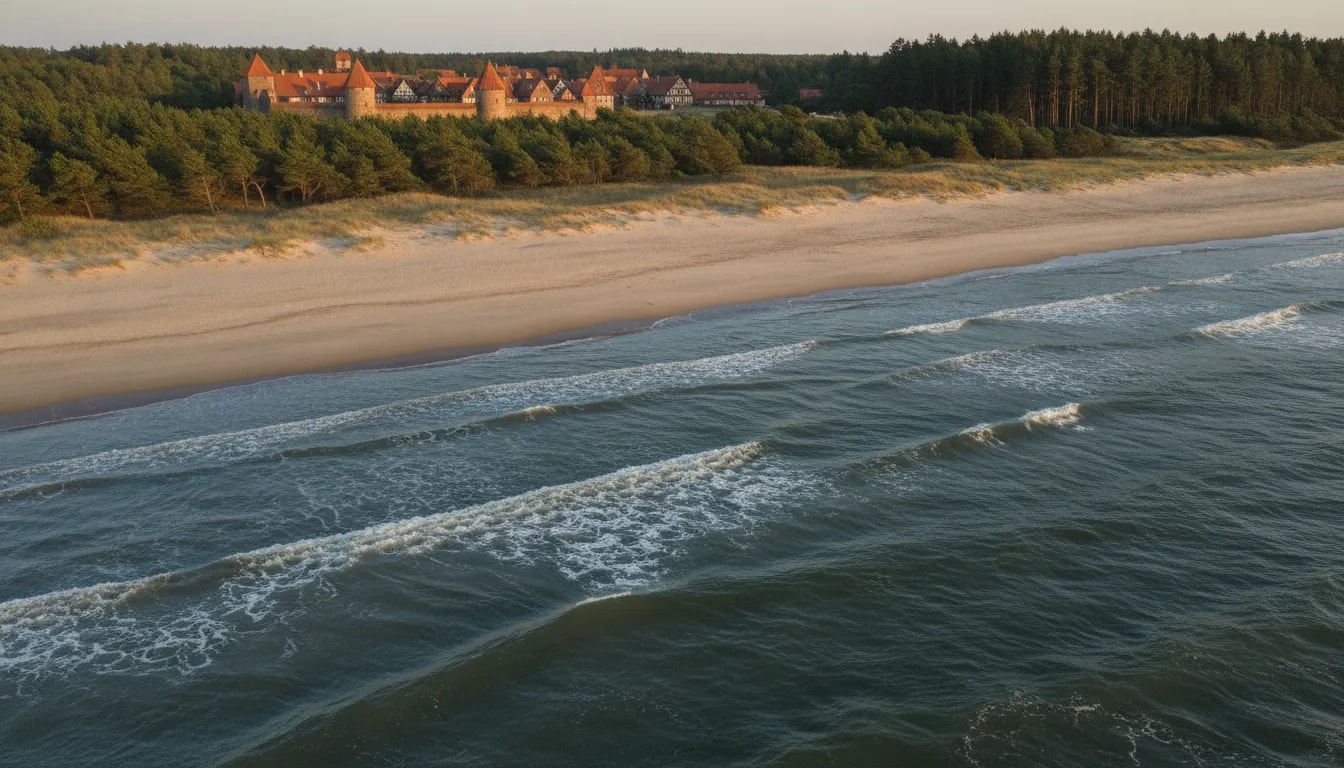
Set between Estonia and Lithuania, facing the Baltic Sea, and wrapped in forests that seem to go on forever, it has a calm, understated presence that feels increasingly rare in Europe. It is not loud about its beauty. It does not need to be.
What Latvia offers is something better:
- Deep nature that still feels genuinely wild
- Historic towns where cobblestones, wooden houses, and medieval walls still shape daily life
- A capital city with remarkable architecture and a strong cultural pulse
- Quiet Baltic beaches that stretch for miles
- Traditions that remain deeply rooted in national identity
For a country of under two million people, Latvia carries an impressive amount of landscape, memory, and character.
A few details capture that immediately:
- About 54 percent of the country is covered in dense woodland
- The inventor of jeans, Jacob W. Davis, was born here
- Latvia gets only around 30 to 40 completely clear sunny days a year, which makes every bright day feel special
- In Liepāja, it is even possible to spend the night in a former Soviet prison
Then there is the cultural side:
- Jāņi, the midsummer solstice celebration with pagan roots
- The Latvian Song and Dance Festival, recognized by UNESCO as part of humanity’s intangible cultural heritage
- A national obsession with ice hockey
Independent since 1991 after decades under Soviet rule, Latvia has spent the modern era rebuilding and affirming its identity. That identity feels strongest not in a single landmark, but in the balance the country holds so well:
- Nature and urban life
- Silence and creativity
- Medieval heritage and modern energy
- Baltic reserve and warm cultural memory
Table of Contents
- 🏙️ Riga: Latvia’s Historic and Cultural Heart
- 🌊 Jūrmala: Latvia’s Quiet Baltic Escape
- 🌬️ Liepāja: Wind, Music, and Soviet Shadows
- 🏞️ Sigulda: Latvia’s Wild Side in the Gauja Valley
- 🏰 Cēsis: Medieval Latvia at Its Most Atmospheric
- 💦 Kuldīga: The Fairy Tale Town with Europe’s Widest Waterfall
- 👑 Rundāle Palace: Latvia’s Aristocratic Masterpiece
- ⚓ Ventspils: A Port City with a Playful Side
- 🌫️ Ķemeri National Park: Latvia’s Most Otherworldly Landscape
- 🏛️ Valmiera: A Young, Active Finish to the Journey
- 🔥 Traditions, Identity, and the Latvian Way of Life
- 🌲 What Makes Living in Latvia Feel Different
- ❓ FAQ
🏙️ Riga: Latvia’s Historic and Cultural Heart
Any serious journey through Latvia begins in Riga.
It is the country’s capital, largest city, and principal gateway. With around 634,000 inhabitants, Riga holds nearly a third of the national population. That alone tells you how central it is to Latvian life.
But Riga is not merely important because of its size. It matters because it condenses so much of Latvia into one place.
- Political center of the country
- Economic hub and key link to the Baltic region
- Cultural capital with museums, theatres, markets, and a strong dining scene
- Architectural treasure with one of Europe’s richest collections of Art Nouveau buildings
The historic center of Riga is a UNESCO World Heritage Site, and it earns that status with ease. A simple walk can turn into an architectural study.
- Ornate facades
- Decorative sculptures
- Elegant rooftops
- Centuries of Baltic, Germanic, and Russian influence layered into one urban fabric
The old town adds another rhythm entirely:
- Cobblestone streets
- Historic churches
- Intimate squares
- A sense of age without feeling frozen
One of Riga’s most striking everyday landmarks is the Central Market, among the largest in Europe. Housed in former Zeppelin hangars, it is a perfect example of how the city recycles history into daily life. Inside, the scale is impressive, but more important is the range of local color:
- Fresh seafood
- Cheeses
- Produce
- Regional specialties
- Ordinary shopping elevated by extraordinary surroundings
Riga also reveals a more contemporary side without any need to erase the old one.
- Modern dining sits comfortably beside tradition
- Libraries and museums give the city intellectual weight
- After dark, bars and restaurants bring out a more cosmopolitan mood
The city’s appeal is that it never feels one-dimensional. Riga is not a museum piece. It is a living capital where history, commerce, and modern urban life continue to overlap naturally.
If Latvia is about balance, Riga is its clearest introduction.
🌊 Jūrmala: Latvia’s Quiet Baltic Escape
Just a short drive from Riga, Jūrmala offers a completely different atmosphere.
If the capital is about movement, culture, and urban layers, Jūrmala is about breathing space. It is Latvia’s favorite seaside escape and one of the most charming beach destinations in the Baltic region.
- More than 33 kilometers of coastline
- Long stretches of fine white sand
- Pine forests meeting the sea
- A noticeably slower rhythm than nearby Riga
What makes Jūrmala especially distinctive is that it is not only a beach town. It is also an architectural and wellness destination.
- Large collection of wooden Art Nouveau and traditional Baltic houses
- Many buildings dating back to the 19th century
- Historic association with Russian and European aristocracy
That history matters because it shaped Jūrmala into a refined retreat rather than just a strip of sand. The town developed a reputation for rest and recovery, and it still carries that identity today.
- Dozens of spas and thermal water resorts
- Natural mineral springs in the area
- A wellness tradition that goes back more than 200 years
The experience of Jūrmala is often in the details:
- Boardwalks crossing the dunes
- Century old pine trees framing the beach
- Sea air mixing with forest scent
- Historic villas hidden among the greenery
This is where Latvia’s quieter side becomes especially clear. Jūrmala does not push itself forward. It simply offers space, air, and stillness with a remarkable amount of grace.
🌬️ Liepāja: Wind, Music, and Soviet Shadows
On Latvia’s southwestern coast, Liepāja tells a different story again.
Known as the city where the wind sings, Liepāja combines sea air, cultural energy, and some of the country’s most unusual historical experiences.
- Coastal city on the Baltic Sea
- Strong reputation for music
- Long, often quiet beaches
- A heavy but fascinating military past
The most unusual part of Liepāja is undoubtedly Karosta, the former military district built by the Russian Empire in the late 19th century. It still carries the stark mood of its original purpose.
Karosta is where the city’s most memorable attraction stands: Karosta Prison.
- Former military penitentiary
- Operated until the late 1990s
- Now offers the chance to spend a night behind bars by choice
- Designed to recreate the routine and atmosphere of imprisonment from that era
It is not a light attraction, nor is it meant to be. It is one of those places where Soviet history becomes immediate rather than abstract.
But Liepāja is not defined only by that darkness.
- Its beaches are broad and often strikingly empty
- The historic center reflects its former importance as a military and commercial port
- The city’s artistic life gives it a creative counterweight
Liepāja is widely associated with the birth of Latvian rock, and that musical legacy still gives the city a distinctive pulse.
- Festivals
- Bars
- Live music culture
- An artistic community that keeps the place from feeling static
What makes Liepāja memorable is contrast:
- Deserted beaches and urban culture
- Creative energy and military architecture
- Open sea horizons and enclosed prison walls
It is one of those Latvian cities that surprises precisely because it refuses to be summarized neatly.
🏞️ Sigulda: Latvia’s Wild Side in the Gauja Valley
If there is a place that breaks the stereotype of Latvia as endlessly flat, it is Sigulda.
Often called the Switzerland of Latvia, Sigulda sits in the Gauja River Valley and has become one of the country’s classic destinations for history, scenery, and outdoor adventure.
- Located in the heart of the Gauja Valley
- Surrounded by Gauja National Park
- Known for forests, sandstone cliffs, caves, and viewpoints
- A major destination for nature lovers and thrill seekers alike
Gauja National Park is the largest and oldest national park in Latvia, and around Sigulda it creates a landscape far more dramatic than many expect from the Baltic region.
- Dense woodland
- Deep river bends
- Sandstone outcrops
- Trails leading to caves and panoramas
Sigulda also concentrates an impressive amount of history into one area. Medieval and later fortifications stand side by side, turning the town into a kind of open-air record of power struggles in the region.
- Sigulda Medieval Castle
- Ruins of the Livonian Order Castle
- The imposing New Sigulda Castle
That alone would make Sigulda worth the trip. But the town also leans fully into adventure.
- One of the few public bobsleigh and luge tracks in Europe
- A zip line crossing the valley
- Direct access to outdoor activities in every season
Sigulda captures a major part of Latvia’s appeal in one place:
- Natural beauty
- Historic depth
- A sense of movement and exploration
It feels Baltic, but with a dramatic edge.
🏰 Cēsis: Medieval Latvia at Its Most Atmospheric
Cēsis feels like stepping into an older, quieter Europe.
Set along the Gauja River, it is one of Latvia’s most charming and best preserved towns, with a medieval atmosphere that still feels tangible rather than decorative.
- Historic town with deep medieval roots
- Strong mix of architecture, parkland, and local culture
- One of the country’s most evocative castle experiences
The centerpiece is Cēsis Castle, among the best preserved medieval fortresses in Latvia. Built in the 13th century by the Livonian Order, it holds onto an unusually strong sense of period atmosphere.
- Original towers still standing
- Historic corridors and stone interiors
- Exploration by candlelight, echoing how the fortress would once have been experienced
That candlelit detail says a lot about the town’s character. Cēsis does not simply display its history. It tries to make the atmosphere of that history felt.
Around the castle, the town opens into gentler scenes:
- Cēsis Park with lakes, bridges, and gardens
- Historic streets lined with old houses
- Churches that reinforce the sense of age and continuity
Cēsis also has another long tradition worth noting: craft beer. The local brewery is one of the oldest in Latvia, with more than 150 years of brewing history.
- Medieval architecture
- Peaceful parkland
- Long brewing heritage
Together, those elements make Cēsis feel complete rather than staged. It is one of the best places to understand how history, local life, and landscape still fit together in Latvia.
💦 Kuldīga: The Fairy Tale Town with Europe’s Widest Waterfall
If one Latvian town looks as though it wandered out of a storybook, it is Kuldīga.
Small, charming, and full of personality, Kuldīga is best known for Ventas Rumba, one of the country’s most remarkable natural landmarks.
- At roughly 249 meters wide
- Considered the widest waterfall in Europe
- Not especially tall, but visually striking because of its immense horizontal sweep
Ventas Rumba is a reminder that scale does not always come from height. Here, the power lies in width. The waterfall stretches across nearly the entire Venta River like a long white curtain.
In late spring, it becomes even more memorable when fish can be seen leaping against the current during migration. It is one of those rare natural spectacles that feels almost improbable until you see it.
Kuldīga itself is just as appealing as the waterfall.
- One of the best preserved historic centers in Latvia
- Colorful wooden houses from the 17th and 18th centuries
- Narrow streets
- An atmosphere often compared to a living open-air museum
The town also has a light sense of humor. Locals have long joked that it is home to the widest bridge in Europe as well, a playful nod to the generous structure that spans the river beside the waterfall.
Kuldīga works because it combines:
- A genuinely unusual natural landmark
- A deeply preserved townscape
- A warmth and intimacy that bigger destinations often lose
It is easy to call it picturesque. It is more accurate to call it unforgettable.
👑 Rundāle Palace: Latvia’s Aristocratic Masterpiece
Deep in the Latvian countryside stands one of the Baltic region’s grandest architectural surprises: Rundāle Palace.
It is often described as Latvia’s Versailles, and while comparisons can be overused, this one makes sense. Rundāle brings an unmistakable scale of aristocratic ambition to a country more often associated with forests, medieval towns, and modest quiet beauty.
- Built in the 18th century
- Designed by Bartolomeo Rastrelli
- Created as the summer residence of the Dukes of Courland
- Contains more than 138 richly decorated rooms
Rastrelli was the same architect responsible for the Winter Palace in Saint Petersburg, and that pedigree shows in the palace’s refinement and theatricality.
Inside, Rundāle is a full expression of aristocratic taste:
- Hand painted ceilings
- Gilded stucco work
- Grand ceremonial halls
- Rococo and Baroque interiors at an impressive Baltic scale
The White Hall and Golden Hall stand out in particular, not only for their decoration but for how completely they evoke the splendor of 18th and 19th century European court life.
The exterior is only half the experience. The French gardens complete the setting with remarkable symmetry.
- Geometric flowerbeds
- Ornamental fountains
- Tree lined approaches
- A rose garden with thousands of varieties
For readers interested in European palace design, the broader context of Baroque architecture helps explain why Rundāle feels so theatrical and controlled at once.
Rundāle proves something important about Latvia. This is not only a land of forests and quiet beaches. It also preserves chapters of grand aristocratic Europe with extraordinary elegance.
⚓ Ventspils: A Port City with a Playful Side
On Latvia’s west coast, where the Venta River reaches the Baltic Sea, Ventspils offers yet another variation of Latvian urban life.
It is a port city, yes, but one that surprises by combining maritime tradition with modern planning and a touch of humor.
- One of the most important ports in the Baltic region
- Long history of shipping and maritime trade
- Known as one of Latvia’s most organized and well kept cities
The maritime story is central:
- Busy port infrastructure
- Historic relationship with trade and the sea
- Landmarks such as the lighthouse and the former Livonian Order Castle, now a museum
But what often leaves the strongest impression in Ventspils is the urban environment itself.
- Well maintained public spaces
- Parks and themed squares
- Leisure areas designed with care
- Colorful cow sculptures scattered around the city as a playful local symbol
That cow motif gives the city a welcome lightness. It keeps Ventspils from feeling purely industrial or functional.
The beaches here are another major asset:
- Long stretches of pale sand
- Dunes and pine groves
- Conditions suited to both relaxation and water sports
- Strong, steady winds typical of the Baltic coast
Ventspils is a useful reminder that modernity does not always need to mean sterility. Here, infrastructure, public investment, and maritime identity coexist with creativity and a human scale.
🌫️ Ķemeri National Park: Latvia’s Most Otherworldly Landscape
At the heart of Latvia lies one of the country’s most distinctive natural environments: Ķemeri National Park.
Forests are common across Latvia. Bogs of this scale and beauty are something else entirely.
- One of Latvia’s greatest natural treasures
- Created to protect one of Europe’s best preserved bog ecosystems
- A place where the landscape feels almost unearthly
The main highlight is the Great Ķemeri Bog, crossed by an elevated wooden boardwalk that allows access without damaging the fragile peatland.
This is where Latvia’s quiet becomes something more atmospheric, almost surreal.
- Low mist at dawn
- Still pools scattered across the bog
- Golden light over sparse vegetation
- A silence that feels immense
It is one of the most photographed landscapes in the country for good reason.
The park also carries traces of an older spa culture. The sulfurous mineral springs in the region once supported one of the largest spa and thermal resort complexes in the Russian Empire during the early 20th century.
- Therapeutic tradition tied to mineral waters
- Historic spa heritage
- The restored former Ķemeri Hotel standing as a symbol of that era
Beyond the bog, the park contains a broader mosaic of habitats:
- Pine forests
- Lakes
- Dunes
- Rich birdlife that attracts birdwatchers from across Europe
If you want a broader sense of why peatlands matter environmentally, the Ramsar Convention on Wetlands offers useful context.
Ķemeri is one of those places that changes the emotional tone of a journey. It slows everything down. It strips away excess. And it reveals how much of Latvia’s identity still rests in landscapes that feel ancient and unmanicured.
🏛️ Valmiera: A Young, Active Finish to the Journey
To close the route, Valmiera brings together history, culture, and a strong sporting identity.
Known as the capital of Vidzeme, it is one of Latvia’s most important cultural and athletic centers outside the capital.
- Located on the banks of the Gauja River
- Balances medieval heritage with youthful energy
- Important regional center for sport and culture
The historic side is still visible in the city fabric:
- Ruins of Valmiera Castle, built by the Livonian Order in the 13th century
- St. Simon’s Church, among the oldest churches in Latvia, with parts dating to the 13th century
But Valmiera is not a town living mainly in the past. It also has a strong reputation for movement and competition.
- Considered Latvia’s capital of winter and outdoor sports
- Hosts cross country skiing and cycling competitions
- Home to one of the country’s busiest BMX and skateboarding scenes
That sporting energy creates an interesting contrast with the city’s medieval remains. Add to that:
- Theatres
- Music festivals
- A university community that keeps the streets lively
Valmiera feels like a fitting final chapter because it sums up so much of contemporary Latvia:
- Rooted in history
- Surrounded by nature
- Quiet but not sleepy
- Traditional yet youthful
🔥 Traditions, Identity, and the Latvian Way of Life
Places alone do not explain Latvia. To understand how people live here, it helps to look at what the country still chooses to preserve.
- Jāņi, the midsummer solstice celebration, remains one of the clearest expressions of Latvian cultural continuity
- The Song and Dance Festival reflects a powerful communal tradition
- Ice hockey shows how deeply sport can shape national emotion
Jāņi matters because it shows how old layers of identity still survive beneath modern European life. The celebration carries pagan roots, seasonal symbolism, and a sense that nature is not separate from culture but part of it.
The Song and Dance Festival reveals something else: Latvia’s identity has long been held collectively through voice, memory, and shared ritual.
That matters in a nation whose modern independence was restored only in 1991 after decades of Soviet rule. Rebuilding identity was never only political. It was also cultural.
That is part of why Latvia often feels so coherent despite its modest size. Across the country, there is a visible effort to hold together:
- Landscape
- History
- Language
- Tradition
- Everyday modern life
🌲 What Makes Living in Latvia Feel Different
So what defines life in Latvia, taken as a whole?
Not one city. Not one monument. Not one postcard scene.
It is the combination.
- Quietness without emptiness
- Nature without overdevelopment
- History without theatrical excess
- Modern life without constant noise
Latvia feels different because it has not surrendered entirely to spectacle.
Its forests still dominate the map. Its beaches still have room to breathe. Its towns still carry their own pace. Its capital still feels human. Its identity still leans on memory, ritual, and place rather than branding.
That does not mean the country is stuck in the past. Quite the opposite.
- Riga shows modern cultural confidence
- Ventspils shows careful public investment
- Valmiera shows youthful energy and sport
- Jūrmala and Ķemeri show how health, rest, and landscape remain central
The overall impression is of a country that understands restraint as a strength.
Latvia may be one of Europe’s quietest places, but quiet here does not mean lacking character. It means there is still space to hear the place itself.
❓ FAQ
What is Latvia best known for?
Latvia is especially known for its vast forests, Baltic Sea coastline, Riga’s Art Nouveau architecture, medieval castles, quiet historic towns, traditions like Jāņi, and landscapes such as Gauja National Park and Ķemeri National Park.
Is Latvia mostly covered by forest?
Yes. Around 54 percent of Latvia’s territory is covered by dense woodland, making forests one of the defining features of the country.
What are the most beautiful places in Latvia?
Some of the most remarkable places include Riga, Jūrmala, Liepāja, Sigulda, Cēsis, Kuldīga, Rundāle Palace, Ventspils, Ķemeri National Park, and Valmiera. Each offers a different side of Latvia, from architecture and beaches to bogs, castles, and waterfalls.
Why is Kuldīga famous?
Kuldīga is famous for Ventas Rumba, considered the widest waterfall in Europe, and for its beautifully preserved historic center filled with wooden houses and old streets.
What makes Riga special?
Riga stands out for its UNESCO listed historic center, one of Europe’s richest collections of Art Nouveau architecture, major cultural institutions, lively food scene, and the enormous Central Market housed in former Zeppelin hangars.
Is Jūrmala worth visiting?
Absolutely. Jūrmala is one of the Baltic region’s most appealing seaside destinations, known for its 33 kilometer beach, pine forests, wooden architecture, and long spa and wellness tradition.
What is unusual about Liepāja?
Liepāja combines long Baltic beaches, a strong musical identity, and the former military district of Karosta, where Karosta Prison offers one of Latvia’s most unusual historical experiences.
What is the best nature destination in Latvia?
That depends on what kind of landscape you want, but Sigulda and Gauja National Park are ideal for forests, cliffs, and adventure, while Ķemeri National Park is the standout choice for bog landscapes, boardwalks, and surreal wetlands.