Living in Taiwan: How People Experience Asia’s Most Underrated Island
Taiwan is one of those places that looks modest on a map yet feels almost limitless once you begin crossing it. The Portuguese named it Formosa, meaning beautiful, and five centuries later the name still fits.
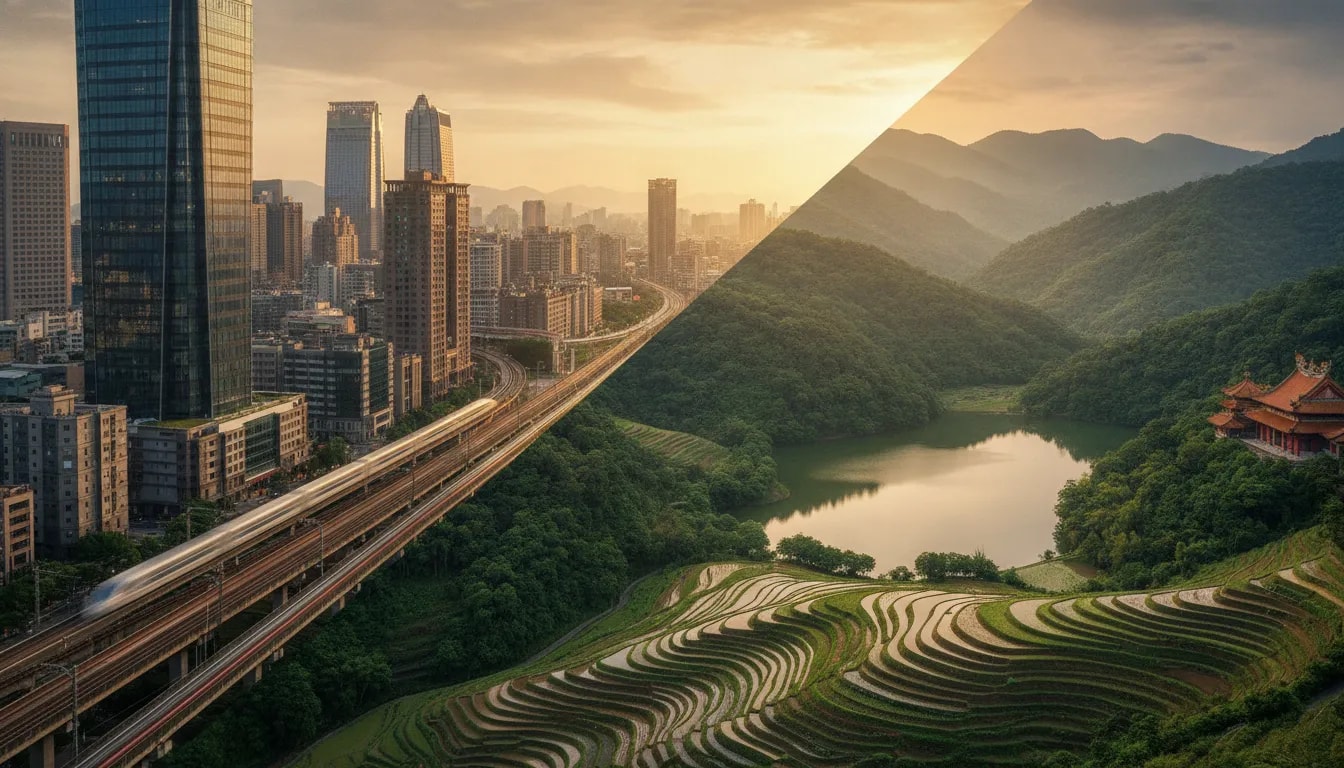
This East Asian island is surrounded by the sea, shaped by tectonic forces, and packed with contrasts that should not logically fit into just over 36,000 square kilometres. Within a few hours, it is possible to move from a futuristic capital and a high-speed rail line to a misty mountain village, a silent lake, a 300-year-old temple, or rice fields that stretch toward distant peaks.
- Population: around 23.5 million people.
- Landscape: 268 mountains rise above 3,000 metres.
- Highest summit: Mount Yushan, also called Jade Mountain, reaches 3,952 metres.
- Geography: two tectonic plates meet beneath the island, creating mountains, hot springs, earthquakes, gorges, and cliffs.
- Modern life: a globally important technology industry exists alongside ancient spiritual traditions.
- Food culture: night markets, local specialities, tea, and bubble tea are part of everyday life.
Taiwan is not one experience. It is a mosaic of cities, coastlines, temples, tea houses, marble canyons, ports, farms, and markets that only come alive after dark.
Table of Contents
- ⛰️ Why Taiwan Feels So Much Bigger Than It Is
- 🏙️ Taipei: Where Temples, Technology, and Night Markets Meet
- 🏮 Jiufen: Lanterns, Tea Houses, and Mountain Mist
- 🏞️ Taroko Gorge: Taiwan’s Marble Masterpiece
- 🌫️ Sun Moon Lake: Mist, Temples, and Sacred Water
- 🍜 Tainan: Taiwan’s Oldest City and Culinary Soul
- 🎨 Kaohsiung: A Port City Reimagined Through Art
- 🪨 Yehliu and Shifen: Stone Formations and Floating Wishes
- 🧋 Taichung: Bubble Tea, Night Markets, and Colour
- 🌊 Qingshui Cliffs: Where Mountains Fall Into the Pacific
- 🌾 Chishang: The Quiet End of the Journey
- 🧭 What Makes Taiwan So Underrated?
- ❓ Frequently Asked Questions
⛰️ Why Taiwan Feels So Much Bigger Than It Is
Taiwan has one of the highest concentrations of tall mountains of any island on Earth. Its central spine rises dramatically from the coast, and the land changes quickly. One moment brings tropical greenery and ocean air. The next brings forested peaks above the clouds.
Mount Yushan stands higher than Mount Fuji and is the highest point in East Asia. That scale is remarkable when the island is only slightly larger than Belgium. The mountains do more than create impressive scenery. They shape how Taiwan feels, how weather moves across it, where communities developed, and how easily the landscape can shift from dense city to apparent wilderness.
The tectonic setting explains many of Taiwan’s great natural spectacles:
- Hot springs bubble from the ground across the island, including some near the sea.
- Earthquakes are part of life on a land in constant geological motion.
- Taroko Gorge was carved through uplifted marble by the Liwu River.
- Qingshui Cliffs rise where the mountains plunge directly into the Pacific Ocean.
- Volcanic valleys and steaming thermal districts sit astonishingly close to major urban areas.
This is the central surprise of Taiwan. The island can be technologically advanced, densely populated, and deeply urban, yet nature is never far away.
🏙️ Taipei: Where Temples, Technology, and Night Markets Meet
Taipei is a capital set inside a basin ringed by lush mountains. It is a city where the old and the futuristic do not merely coexist. They share the same streets.
Taipei 101 and the engineering behind the skyline
Taipei 101 remains the city’s defining landmark. Its shape was inspired by a bamboo stalk, rising in stacked sections above the streets below. It held the title of the world’s tallest building until 2007, and its observation deck sits more than 500 metres above ground.
One of its most remarkable features is not visible from outside. Near the top of the tower hangs a 660-tonne steel sphere. This enormous tuned mass damper moves like a pendulum, helping stabilize the building during typhoons and earthquakes.
The structure is a fitting symbol for Taiwan itself: elegant, modern, and designed around the realities of its powerful natural environment.
Longshan Temple and living spiritual traditions
A short distance from glass towers and busy roads, Longshan Temple offers another side of Taipei. Since the 18th century, incense, offerings, prayers, and worshippers have filled its ornate courtyards.
This is not simply an old monument. It is a living place of devotion, full of movement and ritual. Taiwan’s temples are among the clearest reminders that ancient customs remain woven into everyday urban life.
The National Palace Museum
For a deeper encounter with Chinese art and history, the National Palace Museum holds nearly 700,000 objects spanning thousands of years. Its collection is so vast that only a small fraction can be displayed at once. A return visit can reveal an entirely different selection of treasures.
For current exhibitions and visitor information, consult the National Palace Museum.
Night markets and Beitou’s volcanic warmth
When evening arrives, Taipei shifts gears. Streets become night markets, bright with neon, steam, smoke, and the sound of food being cooked to order. Shilin Night Market is the best known, a labyrinth of stalls where oyster omelettes and ice-cold bubble tea sit beside countless other local snacks.
Then there is Beitou, Taipei’s thermal district. A metro ride can take you from the city to a landscape of natural steam and hot water. Hell Valley, with its volcanic vapour rising from the ground, makes the island’s tectonic energy impossible to ignore.
- For city views: Taipei 101.
- For temple life: Longshan Temple.
- For art and history: National Palace Museum.
- For food after dark: Shilin Night Market.
- For thermal landscapes: Beitou.
🏮 Jiufen: Lanterns, Tea Houses, and Mountain Mist
Less than two hours from Taipei, Jiufen clings to a steep hillside overlooking the Pacific. It began as an isolated settlement, then exploded into prosperity after gold was discovered in the surrounding mountains in the early 20th century.
When the mines were exhausted, Jiufen slipped into quiet decline. That pause in time became its great charm. Today, its Old Street is a maze of stairways, narrow alleys, tea houses, food stalls, and small craft shops. Cars cannot enter much of it, so the village is explored on foot.
- Try taro balls, with their soft and chewy texture.
- Look for peanut ice cream rolls wrapped in a thin pancake.
- Pause for tea prepared in the traditional style.
- Walk the stairways after sunset, when red lanterns glow against dark wooden façades.
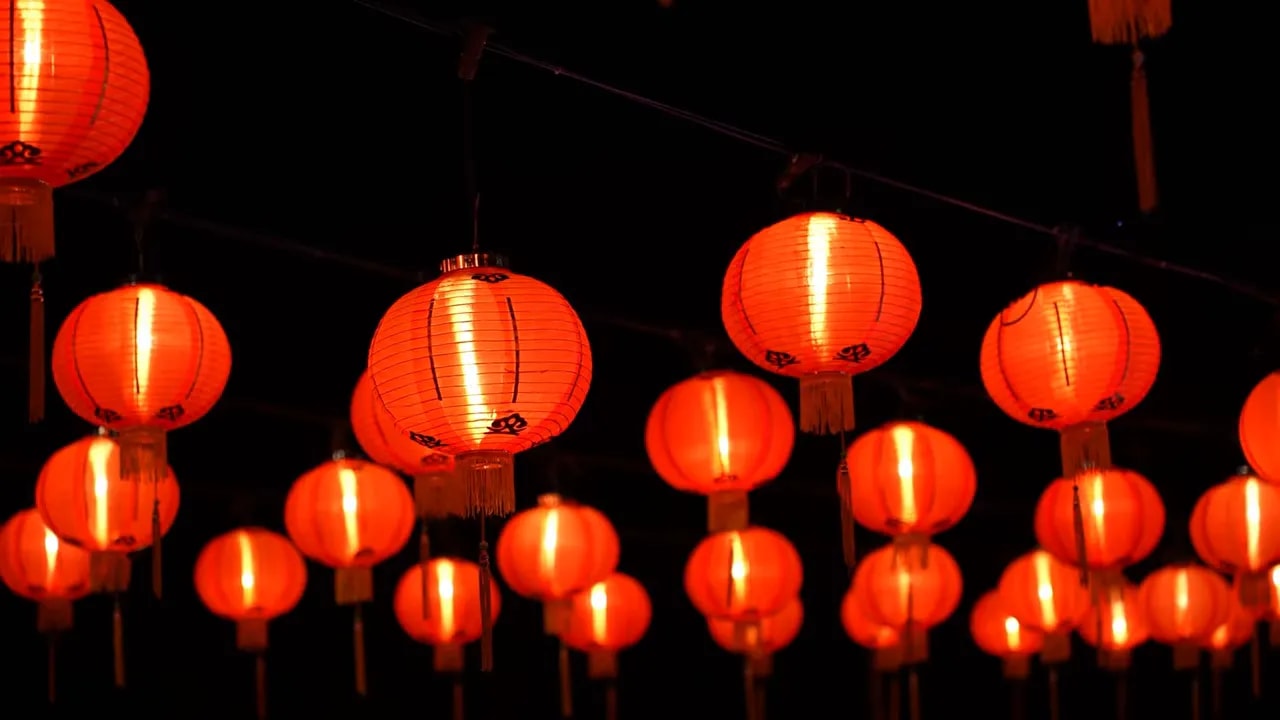
Jiufen is often connected with a famous Japanese animated film, though that inspiration has never been officially confirmed. It does not need the comparison to feel cinematic. Mist from the mountains, persistent fine rain, steep stairs, and the Pacific in the distance create an atmosphere that feels half real and half remembered.
🏞️ Taroko Gorge: Taiwan’s Marble Masterpiece
On the east coast in Hualien County, Taroko Gorge reveals Taiwan at its most dramatic. Here, the Liwu River has spent countless years cutting through stone, forming a narrow canyon with sheer walls rising hundreds of metres overhead.
The essential detail is that these are not ordinary rock cliffs. They are marble. Over millions of years, tectonic uplift pushed limestone upward and transformed it into marble. The river then carved its passage through the rising rock.
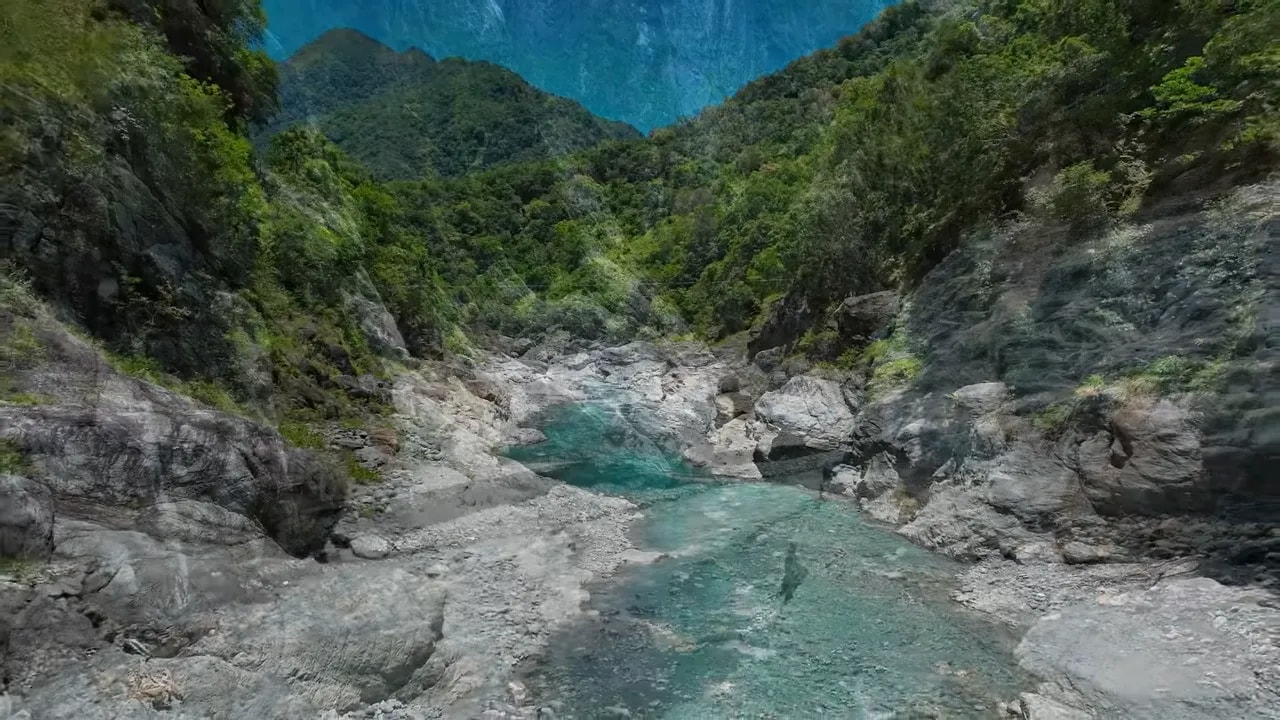
The result is a gorge of grey stone streaked with white veins, where the sky can become only a thin sliver above the canyon walls. Roads cut directly into the mountainside pass through hand-dug tunnels and emerge onto ledges overlooking the abyss.
- Swallow Grotto: cliff walls marked by erosion holes.
- Tunnel of Nine Turns: a winding section through the gorge.
- Eternal Spring Shrine: a pavilion above a waterfall on the mountainside.
- Taroko National Park trails: routes toward waterfalls, hot springs, forests, and suspension bridges.
For official safety notices, trail access, and park details, use the Taroko National Park website. In a landscape shaped by weather and geological forces, conditions can change.
🌫️ Sun Moon Lake: Mist, Temples, and Sacred Water
In Nantou County, near the geographical heart of the island, Sun Moon Lake is Taiwan’s largest body of freshwater. Its name comes from its shape. The eastern side is rounded like the sun, while the western side curves and tapers like a crescent moon.
Lalu Island sits between these two forms. It is sacred to the Thao people, one of Taiwan’s Indigenous groups, whose traditions remain part of the region’s identity.
The lake is at its most beautiful early in the morning. Mist rises from the water and softens the outline of boats, temples, forested mountains, and shorelines. The whole place seems to fall silent.
- Wenwu Temple: stone lions at the entrance and wide views over the lake.
- Ci’en Pagoda: reached by a walk uphill, with a 360-degree panorama.
- Shoreline cycling route: bridges and paths suspended so close to the water that riding can feel like floating.
- Local black tea: cultivated in the surrounding hills for more than a century and regarded among Asia’s finest.
Sun Moon Lake is not about rushing between attractions. It is the place to slow down, let the weather set the pace, and appreciate Taiwan’s calmer rhythm.
🍜 Tainan: Taiwan’s Oldest City and Culinary Soul
Tainan is where Taiwan’s roots remain most visible. It was the island’s first major city and served as its capital for more than two centuries. Narrow streets, old houses, and hundreds of temples give it a character that feels distinctly different from Taipei.
The Confucius Temple, founded in the 17th century, is the oldest in Taiwan. Its shaded courtyards and old trees offer a more contemplative experience than the lively temple streets elsewhere in the city.
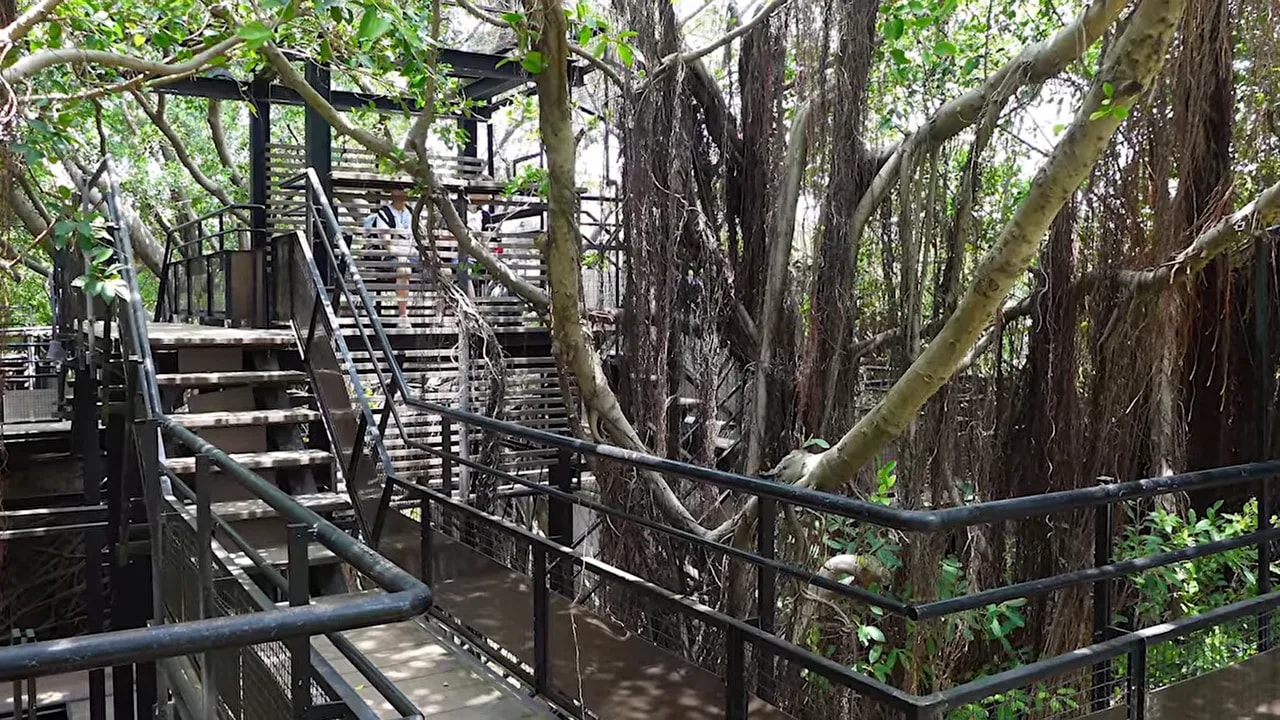
In Anping, the Treehouse presents one of Taiwan’s most unusual sights. An old warehouse was abandoned and gradually engulfed by a banyan tree. Roots now run through its walls, ceilings, and windows, blurring the line between building and forest.
But Tainan’s greatest calling card is food. It is widely considered Taiwan’s culinary capital, a city where recipes pass from one generation to the next through stalls, family kitchens, and old-fashioned eateries.
- Danzai noodles: one of the city’s most beloved dishes.
- Shrimp rolls: a local favourite with a crisp exterior.
- Fish ball soup: a classic comfort dish.
- Coffin bread: thick fried bread filled with creamy stew.
In Tainan, eating is not a side activity. It is one of the surest ways to understand the city.
🎨 Kaohsiung: A Port City Reimagined Through Art
Kaohsiung, Taiwan’s second-largest city and principal port, was long associated with heavy industry and the constant movement of ships through its harbour. Over the past two decades, it has transformed itself.
Former warehouses have become galleries, railway lines have become parks, and the waterfront has turned into an energetic public space. The city has not erased its industrial past. It has given it a new purpose.
- Pier-2 Art Center: old harbour warehouses filled with murals, giant sculptures, studios, cafés, and creative projects.
- Kaohsiung Music Center: part of a revitalized waterfront promenade.
- Formosa Boulevard Metro Station: famous for its 40-metre stained-glass dome.
- Lotus Pond: home to the dragon and tiger pagodas.
- Cijin Island: reached by ferry, with a lighthouse, temple, seaside views, and fresh seafood.
At the Dragon and Tiger Pagodas, tradition suggests entering through the dragon’s mouth and leaving through the tiger’s mouth. Following that path is said to bring good fortune.
Kaohsiung proves that reinvention does not have to mean losing identity. Its docks, sea views, temples, and public art all still belong to the same city.
🪨 Yehliu and Shifen: Stone Formations and Floating Wishes
North of Taipei, two nearby places reveal completely different expressions of Taiwan’s landscape.
Yehliu Geopark
Yehliu is a narrow headland extending into the ocean, where wind, rain, and waves have sculpted sandstone over thousands of years. The shapes look almost unreal: stone mushrooms, honeycombs, candles, giant footprints, and natural basins.
The best-known formation is the Queen’s Head, a narrow-necked rock that resembles the profile of a woman with an elaborate hairstyle. It is beautiful precisely because it is temporary. The erosion that created it continues to weaken it, and one day it will collapse.
Shifen
Shifen is a mountain village divided by an active railway line. Homes and shops stand incredibly close to the tracks. Between passing trains, people write wishes on the four sides of paper lanterns, light the flame, and release them into the sky.
The lanterns rise slowly, turning into small orange points above the mountains. When many are released together, the night sky glows. Nearby, Shifen Waterfall completes the landscape with a broad, powerful cascade surrounded by dense greenery.
🧋 Taichung: Bubble Tea, Night Markets, and Colour
Taichung, in the central west of Taiwan, is the island’s third-largest city and often considered one of its most pleasant places to live. It also has a special place in global food culture: bubble tea was created here in the 1980s.
The idea was simple. Add chewy tapioca pearls to iced milk tea. The result became a worldwide phenomenon and a multi-billion-dollar industry. Tasting it in Taichung feels like arriving at the source of something that has travelled everywhere.
- Fengjia Night Market: Taiwan’s largest night market, spread around the university district.
- Bubble tea: the city’s most famous culinary invention.
- Rainbow Village: modest houses saved from demolition after an elderly resident covered them in colourful paintings.
- Gaomei Wetlands: shallow water at low tide turns the coast into a mirror at sunset, framed by wind turbines.
Taichung has an inventive energy. New food trends often emerge in its markets before spreading across the rest of the country, while Rainbow Village shows how creativity can protect a place that might otherwise have disappeared.
🌊 Qingshui Cliffs: Where Mountains Fall Into the Pacific
Between Hualien and northern Taiwan, the Qingshui Cliffs offer one of Asia’s most overwhelming coastal landscapes. These are not gentle slopes leading down to the sea. They are near-vertical walls of rock rising more than 800 metres above sea level and extending for around 21 kilometres along the coast.
Here, Taiwan’s central mountain range plunges directly into the Pacific. Tectonic plates push the mountains upward while the sea erodes them from below. The result is an extraordinary meeting of dark stone, bright vegetation, turquoise water, and deeper cobalt blue offshore.
- Drive the coastal road, which alternates between tunnels and sweeping bends.
- Stop at viewpoints to understand the scale of the cliffs.
- Experience the coast in sunshine for vivid colour contrasts.
- See it in mist for a softer, dreamlike atmosphere.
- Kayak near the base of the cliffs at sunrise for a humbling sense of scale.
Qingshui Cliffs reveal Taiwan at its wildest. The road may trace the coast, but the mountains and the sea remain the real rulers of this landscape.
🌾 Chishang: The Quiet End of the Journey
Chishang, in the East Rift Valley, feels like the opposite of Taipei. There are no skyscrapers, neon lights, or crowds. Instead, the town sits between mountain ranges and is surrounded by rice fields that roll toward the horizon.
Its beauty is not accidental. The local community chose not to allow electricity poles and overhead wires to cut across the fields. The view remains open: green rice, brown earth, a distant mountain wall, and almost nothing else.
Brown Boulevard is the region’s best-known rural road. It crosses the paddies in a long straight line, with one solitary tree standing as its symbol. A bicycle ride through the fields in the early morning mist is among the island’s most peaceful experiences.
- Spring: fields shine a bright, fresh green.
- Summer: tall rice ripples in the wind like waves.
- Autumn: the fields turn luminous gold before harvest.
- Festival season: open-air concerts take place among the rice fields.
- Food: Chishang rice is considered among Taiwan’s best, and railway boxed meals are famous throughout the country.
Chishang is the perfect final reminder that beneath the computer chips, dense cities, and high-speed trains, Taiwan remains deeply connected to the land.
🧭 What Makes Taiwan So Underrated?
Taiwan refuses to be reduced to one image. It is a place where the following contrasts are not separate experiences but parts of daily life:
- A technology powerhouse with traditions kept alive in incense-filled temples.
- A mountain island where the tallest peaks rise close to tropical coastlines.
- A place of high-speed trains and villages where old stairways remain the only route through town.
- A food destination where global trends begin with tiny stalls and family recipes.
- A densely populated island where silence still exists in lakes, gorges, forests, and rice fields.
That is why Taiwan stays with you. The island may seem small, but it contains an extraordinary number of worlds.
❓ Frequently Asked Questions
What is Taiwan best known for?
Taiwan is known for its dramatic mountains, night markets, temple culture, bubble tea, hot springs, technology industry, high-speed rail, and diverse landscapes ranging from marble gorges to Pacific cliffs and rice valleys.
Where was bubble tea invented?
Bubble tea was invented in Taichung during the 1980s, when tapioca pearls were added to iced milk tea. The drink later became popular around the world.
What are the best natural places to visit in Taiwan?
Some of Taiwan’s most striking natural destinations include Taroko Gorge, Sun Moon Lake, Yehliu Geopark, Shifen Waterfall, Qingshui Cliffs, Beitou’s hot springs, and the rice fields around Chishang in the East Rift Valley.
Why does Taiwan have so many mountains and hot springs?
Taiwan lies at the meeting point of two tectonic plates. Their movement has raised the island’s mountains and contributes to earthquakes, volcanic activity, hot springs, and dramatic coastal formations.
Which Taiwan city is best for food?
Tainan is widely regarded as Taiwan’s culinary capital. It is especially known for Danzai noodles, shrimp rolls, fish ball soup, coffin bread, and a rich street-food culture built around long-standing family recipes.
What makes Taipei 101 special?
Taipei 101 was the world’s tallest building until 2007. Its bamboo-inspired design dominates the skyline, while a 660-tonne steel tuned mass damper near the top helps steady the tower during typhoons and earthquakes.
Taiwan is an irresistible invitation to look beyond the obvious. It is an island of immense contrasts, where a single road can lead from a metropolis to a temple, from a misty lake to a canyon, or from a night market to a field of rice beneath the mountains.