Switzerland Complete Journey: From Zurich to the Matterhorn
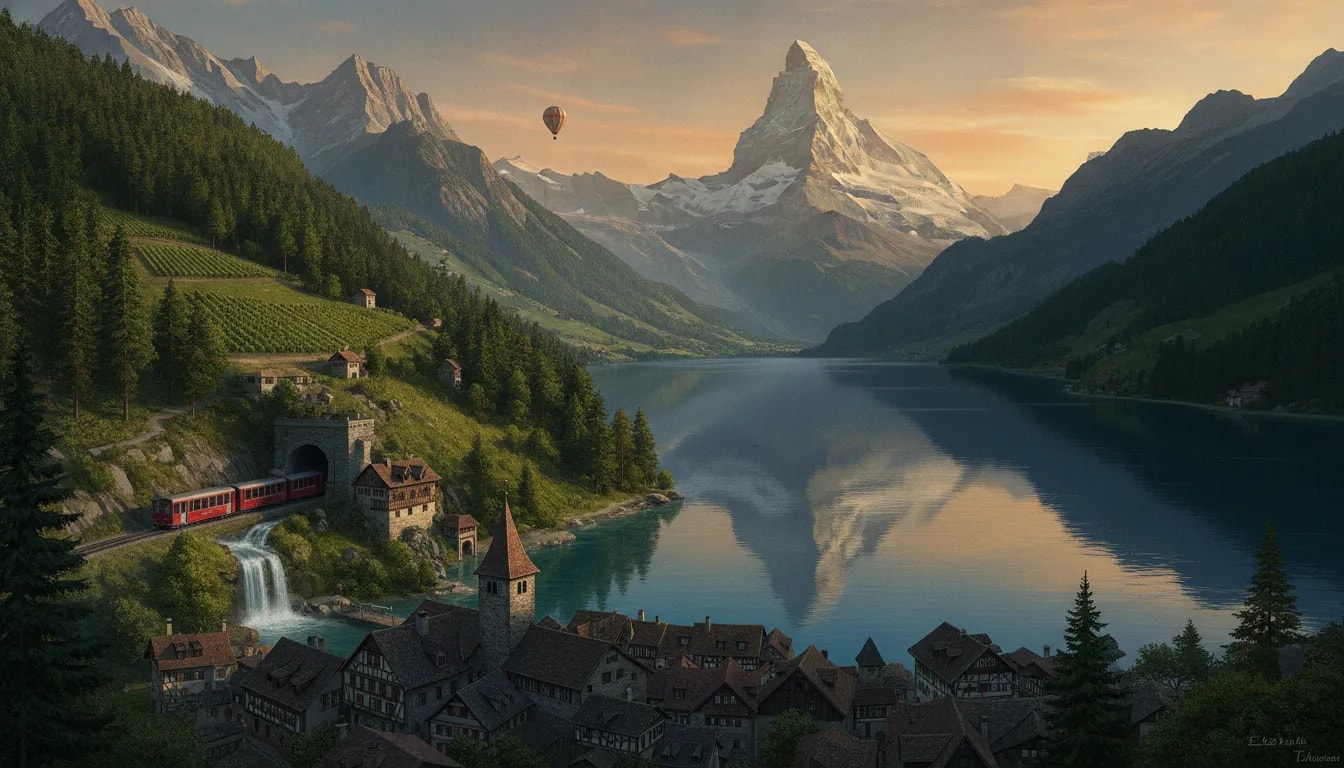
Switzerland is often reduced to a familiar trio: snow-covered mountains, chocolate, and luxury watches. Those symbols are real, of course, but they barely begin to explain the country. This small landlocked nation at the heart of Europe manages to contain grand Alpine drama, medieval towns, multilingual culture, global finance, vineyards, waterfalls, pristine lakes, and villages where time seems to have slowed down.
Bordered by France, Germany, Italy, Austria, and Liechtenstein, Switzerland is a place of remarkable contrasts. Travel a relatively short distance and the language, architecture, food, and atmosphere can change completely. German, French, Italian, and Romansh are all official languages, making the country feel like several cultural worlds woven into one remarkably organized whole.
- More than 7,000 lakes reflect the mountains and cities across the country.
- Chocolate remains a national passion, with average annual consumption exceeding 10 kilograms per person.
- Precision is part of daily life, from railways and engineering to watchmaking and public infrastructure.
- Tradition is fiercely protected, even through quiet Sunday customs that discourage noisy chores such as mowing lawns or vacuuming.
- Modern life and old-world identity coexist, from scientific institutes and diplomatic organizations to wooden granaries and mountain cheese dairies.
This journey moves from Zurich to the Matterhorn and beyond, following the places that reveal Switzerland’s many personalities.
Table of Contents
- 🇨🇭 A Country Built on Contrast
- 🏙️ Zurich: Medieval Streets, Modern Ambition
- 🌊 Rhine Falls: Central Europe’s Roaring Giant
- 🌉 Lucerne: Switzerland’s Romantic Medieval Heart
- 🏛️ Bern: A Capital With a Calm Rhythm
- 🪂 Interlaken, Lauterbrunnen, and Grindelwald: Adventure Meets Poetry
- 🏔️ Zermatt and the Matterhorn: The Alpine Icon
- ❄️ Jungfraujoch: The Top of Europe
- 🌍 Geneva: Diplomacy, Culture, and Lake Life
- ✨ St. Moritz and the Glacier Express: Alpine Elegance
- 🍇 Lavaux: Vineyards Above Lake Geneva
- 🧀 Appenzell: Cheese, Color, and Living Tradition
- 🏘️ Grimentz: A Village Where Time Slows Down
- 🧭 What Makes Switzerland Unforgettable
🇨🇭 A Country Built on Contrast
Switzerland is one of Europe’s strongest examples of balance. It is internationally connected, yet deeply local. It is home to global financial centers and some of Europe’s highest salaries, yet it still treasures folk traditions, pastoral landscapes, and regional recipes.
- Economic strength: The Swiss franc is widely regarded as a stable currency, while Zurich and Geneva are major international business centers.
- High quality of life: Order, safety, public transport, clean cities, and carefully maintained public spaces are central to the Swiss image.
- Craftsmanship: Emmental cheese, fondue, raclette, and legendary watchmaking all carry centuries of local knowledge.
- Alpine geography: Mountains do not merely decorate the horizon. They shape transport routes, local architecture, food, recreation, and the rhythm of life.
The real magic lies in how easily one day can hold both sophistication and wilderness. A morning may begin in a polished city street lined with boutiques, and end beside a roaring waterfall or beneath a glacier.
🏙️ Zurich: Medieval Streets, Modern Ambition
Zurich is Switzerland’s largest city and a perfect first encounter with this dual identity. It is known as a financial powerhouse, but its historical core is every bit as compelling as its modern skyline.
- Bahnhofstrasse: One of Europe’s most prestigious shopping avenues, where luxury boutiques, jewellers, and refined storefronts set the tone.
- Confiserie Sprüngli: A classic stop for Luxemburgerli, the delicate filled macarons that have become a Zurich favorite.
- Altstadt: The Old Town, filled with narrow lanes, historic buildings, and churches that make the city feel far older than its modern reputation suggests.
- St. Peter Church: Known for having Europe’s largest church clock face.
- ETH Zurich: One of the world’s best-known institutions for science and technology, where Albert Einstein once studied.
- Kunsthaus Zürich: A major art museum with works ranging from classical masters to modern and contemporary artists.
Zurich also has a culinary side worth seeking out. Zürcher Geschnetzeltes, tender sliced veal in a creamy white wine sauce, is usually served with golden rösti. It is comfort food with a polished Swiss touch.
As evening arrives, Lake Zurich changes the mood entirely. The city lights appear against the water, while the Alps rise on the horizon. It is one of those places where the urban and the Alpine sides of Switzerland meet without ever competing.
🌊 Rhine Falls: Central Europe’s Roaring Giant
Near Schaffhausen, the Rhine Falls deliver a completely different experience. This is the largest waterfall in Central Europe, measuring around 23 meters high and 150 meters wide. The scale is difficult to appreciate until the water is right in front of you.
- Walkways: Platforms and paths bring you close enough to feel the mist and hear the constant thunder of the water.
- Boat rides: Boats approach the central rock and offer a dramatic perspective from the river itself.
- Rainbows: On sunny days, the mist creates bright arcs of color above the rushing water.
- Scenic trails: Paths along the river connect viewpoints and reveal different angles of the falls.
- Schloss Laufen: The castle on the riverbank offers historic context, sweeping views, and places to pause after exploring.
The Rhine Falls are not simply beautiful. They feel physical. The roar, spray, and speed of the water remind you that Swiss landscapes are not always calm postcards. Nature here can be graceful, but it can also be overwhelming.
🌉 Lucerne: Switzerland’s Romantic Medieval Heart
Lucerne feels almost designed for a storybook. Cobbled streets, decorated facades, a lake, and mountains in every direction create a city where history and scenery blend effortlessly.
- Chapel Bridge: The famous covered wooden bridge dates to the 14th century and remains one of Switzerland’s most recognizable landmarks.
- Water Tower: Standing beside the bridge, this stone tower has served as a prison, archive, and treasure vault over the centuries.
- Lion Monument: A moving sculpture carved into rock in memory of Swiss Guards who died during the French Revolution.
- Musegg Wall: Lucerne’s preserved medieval fortifications, including towers that offer impressive city and Alpine views.
- Lucerne Festival: A major annual celebration of classical music, with world-class orchestras, conductors, and artists.
Lucerne is also a natural gateway to Mount Pilatus. The mountain can be reached by panoramic cable car or by the world’s steepest cogwheel railway. At the top, lakes and peaks spread out in every direction, making it easy to understand why the Alps have inspired artists, climbers, and dreamers for generations.
🏛️ Bern: A Capital With a Calm Rhythm
Bern is Switzerland’s capital, yet it avoids the restless energy often associated with national capitals. Built around a curve in the turquoise River Aare, it combines medieval character with a comfortable, lived-in atmosphere.
- UNESCO-listed Old Town: A beautifully preserved center of red rooftops, stone streets, and historic towers.
- Six kilometers of arcades: Covered walkways shelter cafés, bookshops, boutiques, and everyday city life.
- Renaissance fountains: Decorative fountains with colorful figures add personality to the old streets.
- Zytglogge: Bern’s medieval clock tower, where mechanical figures perform before the hour.
- Bear Park: A natural riverside habitat for the animals associated with the city’s name.
- Einstein’s Bern: The city where Albert Einstein lived and developed ideas that would change modern physics.
Bern rewards slow exploration. It is not a city that demands a frantic checklist. It invites long walks under the arcades, pauses at fountains, and time beside the river.
🪂 Interlaken, Lauterbrunnen, and Grindelwald: Adventure Meets Poetry
Interlaken sits between Lake Thun and Lake Brienz, with the Bernese Alps rising all around it. The name literally means “between lakes,” and few places live up to their name so perfectly.
- Interlaken: A base for paragliding, rafting, canyoning, climbing, skiing, lake cruises, and leisurely mountain exploration.
- Lauterbrunnen: Often called the Valley of 72 Waterfalls, surrounded by cliffs, chalets, gardens, and dramatic cascades.
- Staubbach Falls: A nearly 300-meter free-falling waterfall that drops beside the village.
- Trümmelbach Falls: Glacier-fed waterfalls hidden within a mountain and reached through illuminated walkways.
- Mürren: A mountain village reached by cable car, celebrated for views of the Eiger, Mönch, and Jungfrau.
- Grindelwald: A classic hiking and ski destination dominated by the unmistakable presence of the Eiger.
Interlaken has a lively and adventurous spirit, but it also suits quieter moments. Flower-lined streets, cafés serving hot chocolate, lake cruises, local cheeses, and mountain views mean there is room for both adrenaline and stillness.
Grindelwald brings a slightly different energy. It is more developed for mountain travel, with cable cars, hiking trails, ski runs, shops, and restaurants. The Eiger’s north face, one of mountaineering’s most formidable walls, gives the entire valley a sense of grandeur.
🏔️ Zermatt and the Matterhorn: The Alpine Icon
Zermatt is one of Switzerland’s most iconic mountain villages, lying at the foot of the Matterhorn. The mountain rises to 4,478 meters and is instantly recognizable for its sharply triangular form.
- The Matterhorn: A global symbol of the Alps that has inspired paintings, films, mountaineering history, and even the shape of a famous chocolate bar.
- Mountaineering heritage: British climbers helped establish Zermatt’s reputation during the great Alpine expeditions of the 19th century.
- Car-free atmosphere: Combustion-engine cars have been banned since the 1970s. Electric vehicles, bicycles, and horse-drawn carriages preserve the village’s clean and quiet character.
- Riffelsee: On clear days, this mountain lake reflects the Matterhorn like a mirror.
- Winter sports: Vast ski areas and modern lifts make Zermatt one of Europe’s most celebrated winter destinations.
Food feels especially comforting in Zermatt. Alpine chalets serve bubbling fondue and raclette, while refined restaurants reinterpret regional ingredients. Wines from Valais and apricot tarts provide the final local touch.
Zermatt proves that sustainability and luxury can sit side by side. The village remains polished and internationally famous, yet its traffic restrictions help protect the clear mountain air that makes the place so special.
❄️ Jungfraujoch: The Top of Europe
Jungfraujoch is where Switzerland’s engineering ambition meets its most dramatic high-altitude scenery. Reached by train, the station stands at 3,454 meters, making it the highest railway station in Europe.
- A historic railway: Completed in 1912 after workers carved tunnels through difficult Alpine rock and ice.
- Panoramic ascent: The route climbs from alpine villages toward a world of glaciers and high peaks.
- Aletsch Glacier: The largest glacier in the Alps, extending for more than 20 kilometers and recognized as a UNESCO World Heritage site.
- Sphinx Observatory: A high-altitude research station with a panoramic platform overlooking the Alpine world.
- Ice Palace: A frozen labyrinth with ice corridors and crystalline sculptures.
At this altitude, even an ordinary hot chocolate or bowl of onion soup becomes memorable. There is something surreal about warming your hands around a cup while standing above a sea of ice.
🌍 Geneva: Diplomacy, Culture, and Lake Life
Geneva is Switzerland’s most international city. Close to the French border and resting on Lake Geneva, it is home to major global organizations including the United Nations and the Red Cross.
- Multicultural identity: More than 40 percent of the population is foreign-born, giving Geneva a distinctly international atmosphere.
- Jet d’Eau: The city’s famous fountain sends water 140 meters into the air.
- Old Town: Medieval lanes, quiet squares, old bookshops, and St. Pierre Cathedral reveal Geneva’s historic depth.
- Watchmaking heritage: The Patek Philippe Museum preserves centuries of horological craftsmanship.
- Cultural life: Museums, art fairs, music events, and film festivals keep the city’s cultural calendar active.
Geneva’s great strength is its ability to move between worlds. A walk can lead from diplomatic institutions to a lakeside park, then through medieval alleys into a contemporary gallery or café.
✨ St. Moritz and the Glacier Express: Alpine Elegance
In the Engadin Valley, St. Moritz has long represented glamour, sport, and Alpine luxury. It helped create the idea of the modern winter resort and has hosted the Winter Olympic Games twice.
- Winter spectacle: When Lake St. Moritz freezes, it becomes the setting for horse races and polo tournaments on ice.
- Summer beauty: The same lake reflects the mountains and becomes a starting point for hikes and boat trips.
- Thermal waters: Used since Roman times and now incorporated into luxury spa experiences.
- Glacier Express: The legendary panoramic train linking St. Moritz and Zermatt in approximately eight hours.
The Glacier Express is famously called the slowest express train in the world. That is exactly the point. This is not a route to rush through. It crosses bridges, tunnels, valleys, and mountain passes in panoramic carriages that turn the changing landscape into a moving painting.
🍇 Lavaux: Vineyards Above Lake Geneva
Lavaux is one of Switzerland’s most enchanting landscapes. Stretching along Lake Geneva, its terraced vineyards cover more than 800 hectares and have been cultivated since the Middle Ages.
- UNESCO World Heritage landscape: The terraces preserve a remarkable relationship between farming, stonework, lakeside geography, and village life.
- Stone walls: They absorb the sun’s warmth and help the grapes ripen in this distinctive terroir.
- Walking trails: Paths weave between rows of vines with views across the lake to the Alps.
- Wine villages: Places such as Epesses and Dézaley welcome visitors with local taverns and wines served directly by producers.
Lavaux is a place for taking your time. The landscape changes with the season, light, and weather. A glass of local wine at sunset, with the lake below and the mountains across the water, captures an entirely different side of Switzerland from the snowfields of Jungfraujoch.
🧀 Appenzell: Cheese, Color, and Living Tradition
In eastern Switzerland, Appenzell offers a deeply traditional world of green hills, painted houses, local food, and rural customs. It is the kind of place where regional identity is not treated as a museum piece. It remains part of daily life.
- Decorated buildings: Colorful façades often display painted historical scenes and traditional motifs.
- Appenzeller cheese: Known for its strong, slightly spicy character and a secret herbal mixture used during maturation.
- Interactive cheese dairy: At Appenzeller Schaukäserei, visitors can follow the journey from milk preparation to aging and tasting.
- Regional flavors: Artisanal beers, smoked sausages, traditional breads, and robust cheeses reinforce the area’s culinary character.
- Four-season scenery: Flower-filled summer meadows, golden autumn hills, snowy winters, and vibrant spring fields each bring a different mood.
Appenzell is a reminder that Switzerland’s identity is not only found in major cities or famous peaks. It also lives in the quiet confidence of regional recipes, local craftsmanship, and landscapes shaped by generations of care.
🏘️ Grimentz: A Village Where Time Slows Down
Grimentz, in the canton of Valais, is one of Switzerland’s most photogenic Alpine villages. Its darkened wooden houses, bright red geraniums, narrow lanes, and old granaries make it feel preserved from another era.
- Sun-darkened timber houses: Traditional wooden architecture gives the village its distinctive appearance.
- Rackards: Historic granaries raised on stone stilts, designed to protect stored food from rodents.
- Glacier-fed fountains: Old wooden fountains continue to flow with crystal-clear mountain water.
- Vin du Glacier: A rare local wine aged for decades in larch barrels, preserved as a cultural treasure.
- Living traditions: Folk festivals, Alpine music, and local markets ensure the village remains active rather than frozen in the past.
Grimentz is especially appealing for anyone seeking calm. In summer, trails lead to clear alpine lakes. In winter, it offers skiing with a quieter rhythm than the biggest resorts. Its beauty comes not from spectacle alone, but from its loyalty to its roots.
🧭 What Makes Switzerland Unforgettable
Switzerland cannot be captured by one image. It is not only luxury, not only mountains, not only chocolate, and not only postcard villages. It is a country where all of these things belong together.
- Zurich and Geneva reveal finance, science, diplomacy, art, and international life.
- Lucerne and Bern preserve medieval streets, bridges, towers, and historic traditions.
- Interlaken, Lauterbrunnen, Grindelwald, Zermatt, and Jungfraujoch show the raw power and beauty of the Alps.
- St. Moritz adds sophistication and winter glamour.
- Lavaux brings vineyards, stone terraces, and lakeside serenity.
- Appenzell and Grimentz preserve some of the country’s most authentic regional traditions.
For practical cultural and travel information, the official Switzerland Tourism website and the UNESCO World Heritage listings for Switzerland offer useful context on many of these landscapes and historic places.
That is Switzerland at its most compelling: a country where precision meets poetry, where a medieval clock can stand near world-class innovation, and where every train ride seems to lead toward another lake, valley, village, or mountain that feels impossible to forget.
❓ Switzerland Travel FAQ
What are the most iconic places to visit in Switzerland?
Zurich, Lucerne, Bern, Interlaken, Lauterbrunnen, Grindelwald, Zermatt, Jungfraujoch, Geneva, St. Moritz, Lavaux, Appenzell, and Grimentz each reveal a different side of the country.
Why is Zermatt famous?
Zermatt lies at the foot of the Matterhorn, one of the world’s most recognizable mountains. It is also known for skiing, hiking, car-free streets, Alpine food, and views from places such as Riffelsee.
What is Jungfraujoch known for?
Jungfraujoch is known as the Top of Europe because its railway station stands at 3,454 meters. It offers views of the Aletsch Glacier, access to the Ice Palace, and a panoramic platform at the Sphinx Observatory.
Which Swiss destination is best for waterfalls and dramatic valleys?
Lauterbrunnen is the standout choice, with its famous valley of waterfalls, including Staubbach Falls and the mountain interior cascades of Trümmelbach Falls. The Rhine Falls near Schaffhausen provide another powerful water-focused experience.
Where can you experience Swiss wine country?
Lavaux, above Lake Geneva, is Switzerland’s best-known vineyard landscape. Its historic terraced vineyards, walking paths, small villages, and lake views create a memorable wine-country experience.