Italy Beyond Rome: 13 Places That Feel Unreal
Italy is not a destination that can be reduced to a checklist. It is a country where ancient amphitheaters stand beside lively markets, where mountain peaks glow pink at sunset, and where a simple plate of pasta can carry centuries of local tradition.
Its boot-shaped peninsula stretches between the Adriatic, Ionian, and Tyrrhenian seas, with the Alps in the north, active volcanoes in the south, and an extraordinary concentration of art, architecture, cuisine, and landscapes throughout. Italy is also the birthplace of the Renaissance, the home of artists such as Michelangelo and Leonardo da Vinci, and a land of more than 60 million people whose regional identities make every journey feel completely different.
From Rome’s imperial ruins to Sicily’s Greek temples, here are the Italian places that reveal why every road in this country seems to lead somewhere unforgettable.
Table of Contents
- 🏛️ Rome: Where the Ancient World Still Feels Alive
- 🛶 Venice: A City Built on Water and Imagination
- 🍇 Tuscany and Florence: The Renaissance in the Landscape
- 👗 Milan: Fashion, Design, Art, and Opera
- 🌋 Pompeii: A City Preserved by Vesuvius
- 🏔️ The Dolomites: Italy’s Wild Alpine Wonderland
- 🪨 Matera: A City Carved from Stone
- 🏠 Alberobello: The Fairytale World of the Trulli
- 🍋 The Amalfi Coast: Cliffs, Lemons, and Mediterranean Light
- 🌊 Cinque Terre: Five Villages Between Land and Sea
- 🏺 Agrigento: Sicily’s Valley of the Temples
- 🍕 Naples: Bold Flavors and Unfiltered Energy
- ✨ What Makes Italy Feel Endless
🏛️ Rome: Where the Ancient World Still Feels Alive
Rome is the eternal capital, a place where the past does not sit quietly behind museum glass. It rises from the streets, appears in piazzas, and shapes the rhythm of daily life.
- The Colosseum: Built nearly 2,000 years ago, this enormous amphitheater once held around 50,000 people for gladiatorial contests and public spectacles. Its scale is a reminder of just how ambitious Roman engineering was.
- The Roman Forum: Temples, markets, squares, and government buildings once formed the political and social heart of ancient Rome here. Walking among the ruins feels like turning the pages of a history book written in stone.
- The Trevi Fountain: This Baroque masterpiece is far more than a landmark. Tossing a coin into its turquoise waters continues the famous tradition said to ensure a return to Rome.
- Vatican City: St. Peter’s Basilica dominates the skyline with its vast dome. The Sistine Chapel, celebrated for Michelangelo’s frescoes, remains one of the great artistic achievements of the Renaissance.
Rome works best when approached as a living city rather than an open-air museum. Between monuments, pause for an espresso, linger in a neighborhood trattoria, and remember that history here is never very far away.
🛶 Venice: A City Built on Water and Imagination
Venice has a way of making reality feel theatrical. Built across 117 small islands in the Venetian Lagoon, the city is linked by more than 400 bridges and crossed by nearly 150 canals. There are no ordinary streets filled with cars. Water is the city’s great avenue.
- Grand Canal: The broad waterway curves through Venice past palaces, churches, and centuries of maritime wealth.
- Gondolas: These elegant black boats have been part of Venetian life for more than a thousand years. A passage through the narrow canals reveals the city at its most intimate.
- Bridge of Sighs: Built in the early 17th century, the bridge connects the Doge’s Palace to the old prisons. Its name recalls the last glimpses of Venice taken by prisoners as they crossed it.
- St. Mark’s Square: Venice’s grand public stage is home to St. Mark’s Basilica, known for golden mosaics, Byzantine-inspired domes, and more than eight centuries of history.
- Carnival: During Carnival, elaborate masks and period costumes transform the city into a spectacular open-air theater with roots reaching back to the 16th century.
Venice rewards slow wandering. A quiet canal, a tiny bridge, or an old café can feel just as memorable as its grandest monuments.
🍇 Tuscany and Florence: The Renaissance in the Landscape
Tuscany looks as if it was designed to become a painting. Rolling hills, vineyard rows, cypress-lined roads, hilltop villages, and stone farmhouses create a landscape that feels both timeless and deeply human.
- Val d’Orcia: This UNESCO-recognized Tuscan landscape is defined by soft hills, wheat fields, vineyards, and rural roads that seem to disappear into the horizon.
- Pienza: A carefully planned Renaissance town, Pienza was envisioned in the 15th century as an ideal city. Its cobbled lanes and harmonious architecture still reflect that ambition.
- Chianti: Wine country here is about more than tasting. Chianti Classico, made primarily from Sangiovese grapes, comes with olive oils, local products, and a closer connection to the farms behind the bottle.
- Florence: Often called the cradle of the Renaissance, Florence holds Michelangelo’s David, Brunelleschi’s immense dome for Santa Maria del Fiore, and the romantic Ponte Vecchio crossing the Arno River.
Tuscany is not only about famous cities and labels on wine bottles. It is about the pleasure of moving slowly through a place where every village, vineyard, and stone wall tells an old story.
👗 Milan: Fashion, Design, Art, and Opera
Milan is Italy at its most cosmopolitan. It is a city of fashion and design, but its energy comes from the contrast between luxury storefronts, Gothic architecture, Renaissance art, grand opera, and refined regional food.
- Duomo di Milano: Milan’s cathedral is an extraordinary Gothic landmark covered in intricate sculptural detail. The rooftop offers an unforgettable perspective over the city, especially near sunset.
- Galleria Vittorio Emanuele II: One of the world’s oldest shopping galleries, it is recognizable for its glass-vaulted roof, ornate interiors, and designer boutiques.
- The Last Supper: Leonardo da Vinci’s celebrated Renaissance masterpiece is housed at the Convent of Santa Maria delle Grazie.
- Teatro alla Scala: One of the most prestigious opera houses in the world, La Scala embodies Milan’s long relationship with music and performance.
- Local flavors: Risotto alla milanese and cotoletta alla milanese are essential expressions of the city’s culinary identity.
Explore neighborhoods such as Brera and Navigli to feel the city beyond its grand monuments. Milan thrives where art, food, history, and the future meet.
🌋 Pompeii: A City Preserved by Vesuvius
Pompeii is among the most moving archaeological sites in the world. In 79 AD, Mount Vesuvius buried the city under ash and pumice, preserving streets, homes, artwork, inscriptions, and fragments of everyday Roman life.
- Original streets: Stone-paved roads still trace the urban fabric of a once-thriving Roman city.
- Private homes: The House of the Faun, one of Pompeii’s largest residences, shows the wealth and artistic ambition of its owners through surviving mosaics and decoration.
- Frescoes: The House of the Chaste Lovers contains paintings that offer a striking glimpse into Roman art and culture.
- Forum and market: Pompeii’s forum once served as its political, social, religious, and economic center, surrounded by important public buildings.
- Graffiti and inscriptions: Ancient advertisements, jokes, declarations, and messages survive on walls, making the city’s long-gone inhabitants feel remarkably close.
Pompeii is a tragedy, but it is also an extraordinary record of ordinary life. That combination gives the ruins their rare emotional power.
🏔️ The Dolomites: Italy’s Wild Alpine Wonderland
In northern Italy, the Dolomites rise in jagged formations above green valleys, mountain lakes, and villages. These UNESCO-recognized peaks exceed 3,000 meters in places and offer a completely different side of Italy.
- Enrosadira: At sunset, the pale rock formations take on shades of orange and pink. This famous glow is one of the Dolomites’ most magical natural spectacles.
- Summer hiking: More than 1,200 kilometers of trails cross valleys, forests, lakes, and high mountain passes. Routes such as Alta Via 1 lead to alpine refuges serving dishes such as polenta and strudel.
- Adventure sports: Mountain biking and paragliding offer another perspective on the dramatic terrain.
- Winter escapes: The region becomes one of Europe’s major ski destinations, with connected ski areas, extensive slopes, snowshoe walks, and sleigh rides.
The Dolomites are an invitation to move, breathe deeply, and trade city streets for the scale and silence of the mountains.
🪨 Matera: A City Carved from Stone
Matera feels ancient because it is. Its famous sassi, homes carved into limestone rock, date back to the Paleolithic era and form one of the world’s oldest continuously inhabited settlements.
- The Sassi di Matera: Narrow streets, stairways, caves, and stone dwellings create a labyrinth that seems to belong to another age.
- A remarkable transformation: Matera was once associated with extreme poverty, but it has been transformed into a vibrant destination and was recognized as a UNESCO World Heritage Site in 1993.
- Cave hotels: Some former homes now operate as boutique accommodations, pairing contemporary comfort with rooms literally carved from rock.
- Regional cuisine: Try Matera bread, local cheese, olive oil, and peperone crusco, the crisp dried pepper that is a signature flavor of Basilicata.
- Cinematic atmosphere: The city’s timeless appearance has made it a striking location for major film productions.
Matera is not polished in the conventional sense. Its beauty comes from texture, adaptation, survival, and the feeling that the landscape and city have grown together over thousands of years.
🏠 Alberobello: The Fairytale World of the Trulli
In Apulia, Alberobello looks like a town imagined from folklore. Its streets are lined with trulli, white limestone homes topped with distinctive conical roofs.
- A clever building method: Many trulli were built without mortar. The technique allowed structures to be dismantled quickly, reportedly helping owners avoid taxes on permanent properties.
- Rione Monti: The best-known district contains more than 1,500 trulli packed along winding streets.
- Church of Saint Anthony: Built in the shape of a trullo, this church turns local building traditions into a memorable architectural statement.
- Aia Piccola: This quieter neighborhood offers a more residential atmosphere, with trulli that remain part of everyday local life.
- Symbols on the roofs: Many conical roofs carry painted religious or astrological symbols intended to offer protection.
Finish the experience with Apulian classics such as burrata, orecchiette pasta, and local wine. In Alberobello, architecture and food are equally rooted in place.
🍋 The Amalfi Coast: Cliffs, Lemons, and Mediterranean Light
The Amalfi Coast stretches for roughly 50 kilometers along the Tyrrhenian Sea, where dramatic cliffs plunge toward clear water and villages cling to impossibly steep slopes. It is one of Italy’s great visual masterpieces.
- Positano: Colorful homes spill down the hillside toward Spiaggia Grande, creating the famous image of pastel buildings against blue water.
- Amalfi: The historic town lends its name to the coastline and is centered on St. Andrew’s Cathedral, known for its distinctive Arab-Norman facade.
- Maritime history: Amalfi was one of Italy’s four powerful maritime republics during the Middle Ages.
- Scenic roads: The coastal route reveals dramatic viewpoints around almost every curve.
- Lemon groves and limoncello: Terraced groves produce the large local lemons used in the region’s refreshing signature liqueur.
The Amalfi Coast is a place to savor rather than rush. A sea view, a lemon-scented terrace, or a slow walk through a narrow lane can become the highlight of the day.
🌊 Cinque Terre: Five Villages Between Land and Sea
Cinque Terre in Liguria is a chain of five cliffside villages where colorful homes rise directly above the Mediterranean. Monterosso al Mare, Vernazza, Corniglia, Manarola, and Riomaggiore each have their own character, but together they form one of Italy’s most iconic coastal landscapes.
- Riomaggiore: Often the gateway to the region, it is known for narrow streets and the Via dell’Amore route toward Manarola.
- Manarola: Vineyards and glowing sunsets make this one of the most photographed villages in Italy.
- Vernazza: Its small harbor and the Church of Saint Margaret of Antioch create an especially picturesque waterfront scene.
- Corniglia: The only village without direct sea access, Corniglia sits high above the coast among vineyards.
- Monterosso al Mare: The largest of the five, Monterosso is ideal for beaches and local limoncello.
- Sentiero Azzurro: The Blue Trail links the villages through hiking routes with dramatic sea views.
Fresh seafood and local white wine belong naturally to the experience. Cinque Terre captures the quiet harmony between labor, landscape, and the Mediterranean way of life.
🏺 Agrigento: Sicily’s Valley of the Temples
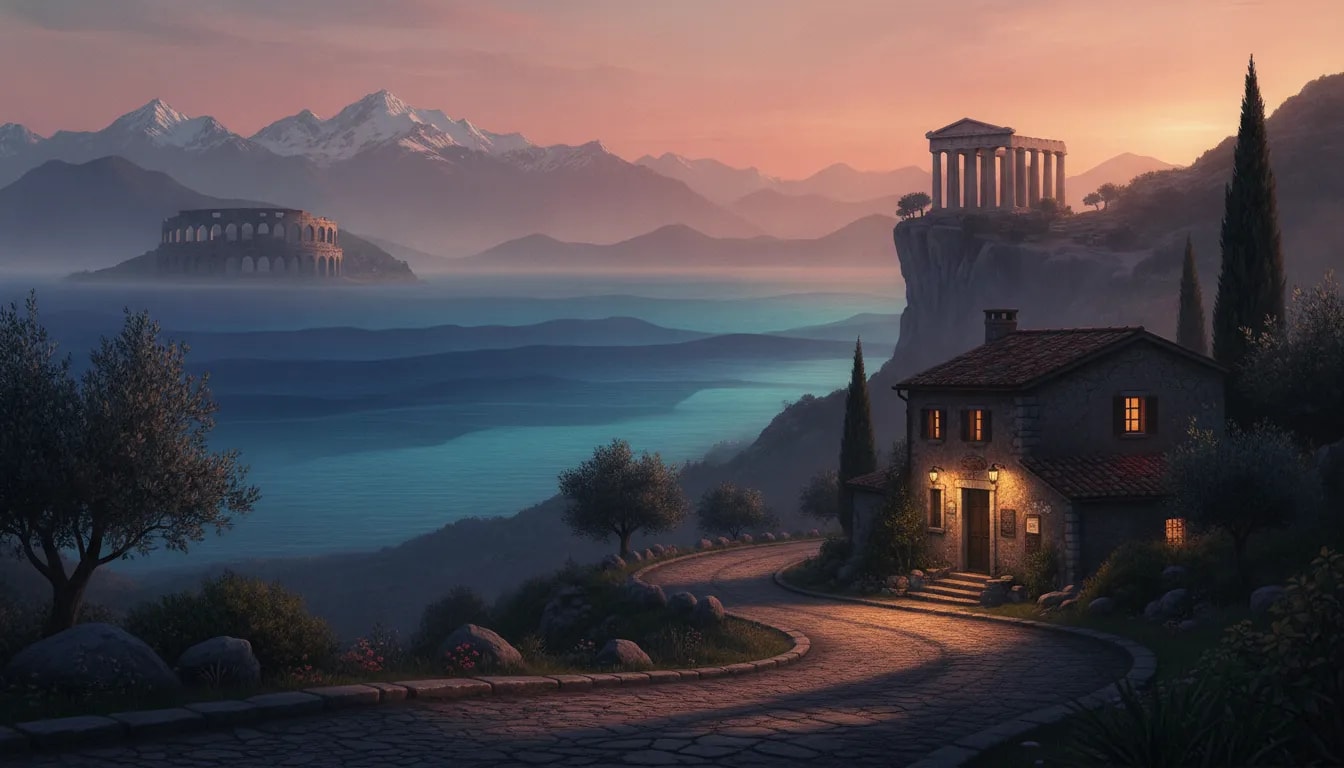
On Sicily’s southern coast, Agrigento’s Valley of the Temples reveals the immense legacy of Greek civilization on the island. Dating from the 5th century BC, these Doric temples stand in a landscape of olive trees, hills, and wide Sicilian skies.
- Temple of Concordia: With its remarkably preserved columns, this is among the finest examples of Greek architecture outside mainland Greece.
- Temple of Juno: Set high on a hill, it offers far-reaching views toward the Sicilian coast, particularly beautiful when the evening sky turns gold and red.
- Ancient olive trees: The pathways around the temples are lined with old olive trees, connecting classical history with a still-living regional tradition.
- Archaeological Museum: Ceramics, coins, sculptures, and other finds help tell the story of Agrigento as a major center of Magna Graecia.
The Valley of the Temples is proof that Sicily is never only one thing. It is Italian, Mediterranean, Greek, Arab, Norman, and entirely itself.
🍕 Naples: Bold Flavors and Unfiltered Energy
Naples is intense, historic, chaotic, warm, and impossible to imitate. It is a city where everyday life unfolds loudly in the streets and where food is treated with serious devotion.
- The birthplace of pizza: Authentic Neapolitan pizza is defined by its thin base, softly raised edge, and restrained ingredients, often including San Marzano tomatoes and buffalo mozzarella.
- A protected tradition: Neapolitan pizza is recognized by the European Union as a traditional specialty guaranteed.
- Castel dell’Ovo: Naples’ oldest castle stands on the Gulf of Naples and dates to the 12th century. Legend tells of a magical egg hidden in its foundations to protect the city.
- National Archaeological Museum: One of the world’s great archaeological museums, it holds important artifacts from Pompeii and Herculaneum, including the Alexander Mosaic.
- Spaccanapoli: This historic street cuts through the city’s old center, bringing together markets, churches, street life, and the raw energy that defines Naples.
Naples is not interested in being perfectly orderly. Its power lies in its authenticity, its appetite, and its unmistakable ability to make history feel immediate.
✨ What Makes Italy Feel Endless
Italy’s greatest strength is its contrast. The country can move from Roman ruins to Alpine trails, from Greek temples to Gothic cathedrals, from cave dwellings to glamorous city galleries, all within a single journey.
- For history: Rome, Pompeii, Agrigento, Venice, and Matera offer layers of civilization that span millennia.
- For art and architecture: Florence, Milan, Rome, Alberobello, and Venice show entirely different creative worlds.
- For landscapes: Tuscany, the Dolomites, Cinque Terre, and the Amalfi Coast prove that Italy’s scenery is as varied as its cities.
- For food: Naples pizza, Tuscan wines, Milanese risotto, Matera bread, Apulian burrata, and Amalfi limoncello make every region a culinary destination.
- For surprise: The country always holds another lane, viewpoint, village, chapel, market, or meal that changes the journey.
Italy is more than a place to visit. It is a meeting point between the human and the extraordinary, where art, nature, food, and history never seem separated from one another. Every return reveals another layer, another taste, and another story waiting just beyond the next turn.
❓ Italy Travel FAQ
Which places in Italy are best for history lovers?
Rome, Pompeii, Agrigento, Venice, Matera, and Naples are especially rich in history. They span ancient Roman ruins, Greek temples, Renaissance art, medieval architecture, and archaeological collections.
What is the best destination in Italy for mountain scenery?
The Dolomites are Italy’s standout mountain destination. They offer dramatic peaks, hiking trails, alpine refuges, skiing, snowshoeing, and the famous pink-orange glow of Enrosadira at sunset.
Which Italian destinations are best for coastal views?
The Amalfi Coast and Cinque Terre are two of the most spectacular coastal regions. Positano, Amalfi, Vernazza, Manarola, and Riomaggiore combine colorful buildings, cliffs, sea views, and regional cuisine.
Where should food lovers go in Italy?
Naples is essential for Neapolitan pizza, Tuscany for Chianti wine and olive oil, Milan for risotto and cotoletta, Matera for regional bread and crispy dried peppers, and Apulia for burrata and orecchiette.
What makes Matera so unique?
Matera is known for the Sassi, ancient homes carved directly into limestone. The settlement has roots in the Paleolithic era and combines cave architecture, historic streets, boutique accommodations, and Basilicata cuisine.