The Himalayas: A Journey Through Nepal, Everest, Bhutan, Tibet, India and Pakistan
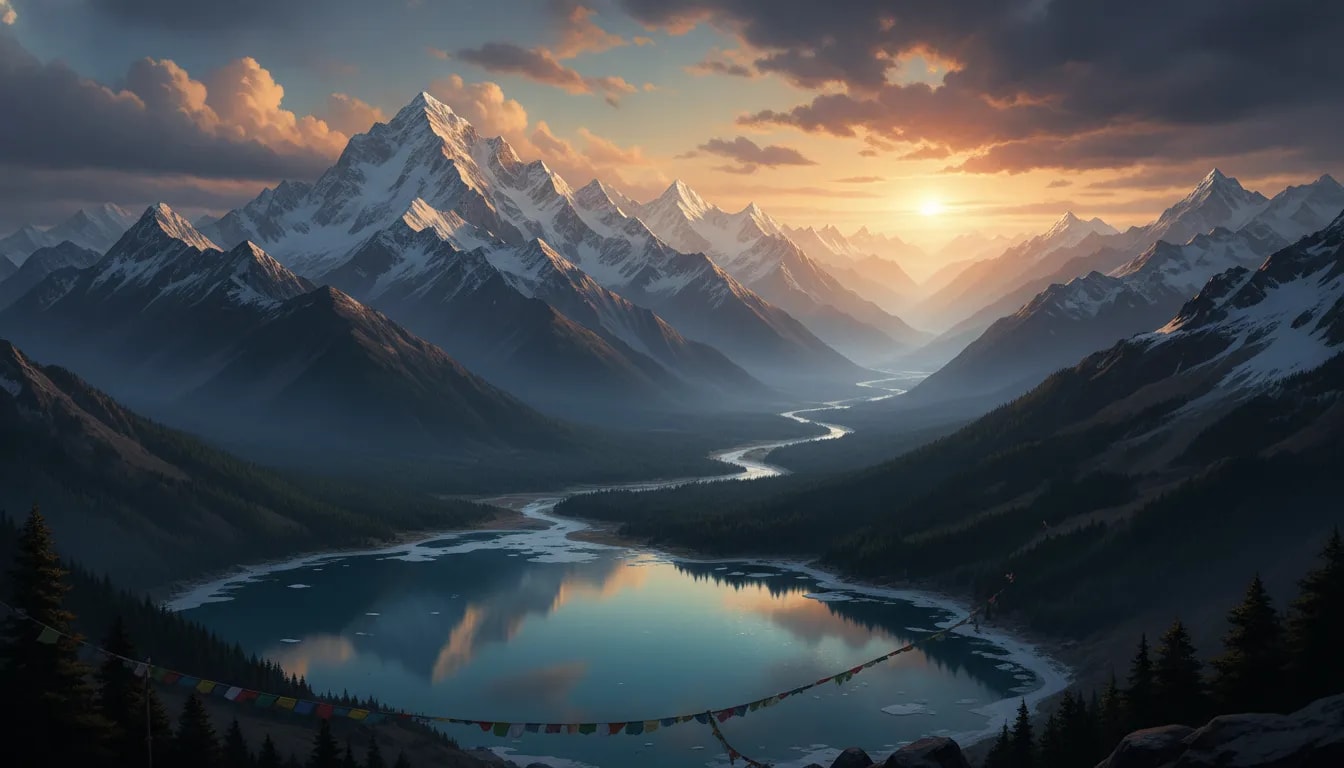
The Himalayas are not simply the highest mountain range on Earth. They are a vast living world shaped by ice, altitude, faith, rivers, forests, isolated valleys, and communities that have learned to thrive among some of the planet’s most formidable landscapes.
Stretching for more than 2,500 kilometers across Nepal, India, Bhutan, Pakistan, and Tibet, the Himalayas contain the world’s 14 highest peaks, including Mount Everest at 8,849 meters. Yet Everest is only one chapter of the story. Beyond its summit lies a world of sacred lakes, cliffside monasteries, ancient forts, tea-covered hills, frozen rivers, and trails that demand patience as much as strength.
🏔️ Why the Himalayas Matter
- A mountain range of global scale: The Himalayas form a colossal barrier across Asia and hold the highest concentration of towering peaks anywhere on Earth.
- The abode of snow: The name Himalaya comes from Sanskrit and is commonly understood to mean “abode of snow.”
- Asia’s water tower: Glaciers and snowfields feed major river systems that sustain nearly 2 billion people.
- A living geological landscape: These mountains are geologically young, and their formation is still continuing.
- A refuge for rare wildlife: The region supports remarkable species, including the snow leopard and red panda.
- A spiritual crossroads: Hinduism, Buddhism, Jainism, and the Bon faith all hold particular Himalayan places sacred.
What makes this region so extraordinary is the contrast. One day may bring forests full of rhododendrons and mossy streams. The next may reveal windswept highlands, glacial rivers, prayer flags, villages of stone, and immense peaks rising beyond the clouds.
The Himalayas are also deeply human landscapes. Their spiritual traditions, pilgrimage routes, agricultural practices, monasteries, fortresses, and festivals have been shaped by generations of life at high altitude. Here, a trek can be an expedition, a pilgrimage, and a cultural encounter at the same time.
🏔️ Everest and the Khumbu: More Than the Highest Summit
Mount Everest is an irresistible symbol of the Himalayas. At 8,849 meters, it stands as the highest mountain on the planet, but its real power is not limited to altitude. The approach to Everest Base Camp reveals an entire high-mountain world where Sherpa culture, Buddhist devotion, and extreme terrain are inseparable.
- Everest Base Camp Trek: The journey passes through Sherpa villages, stone homes, suspension bridges, glacial rivers, and trails marked by colorful prayer flags.
- Prayer wheels and flags: These familiar details are reminders that the mountains are not viewed merely as obstacles or scenery, but as a sacred environment.
- Tengboche Monastery: Located at 3,867 meters, this is the largest Buddhist monastery in the Khumbu region and has commanding views toward Ama Dablam and surrounding peaks.
- Mani Rimdu: Held in November, this festival brings masked dances and spiritual rituals together in a vivid expression of Tibetan Buddhist culture.
- Acclimatization: Altitude is one of the defining challenges of the Everest region. Strategic rest stops are essential, and local guides bring hard-earned knowledge of the landscape.
The Everest experience is powerful because it refuses to be reduced to a finish line. Every stage matters: the steady climb, the crossing of a bridge above icy water, the sound of prayer wheels turning, the sight of a distant summit, and the quiet work of adapting to thin air.
For reliable context on the region’s protected landscapes and cultural heritage, explore the UNESCO page for Sagarmatha National Park.
🌿 Langtang Valley and Gosainkunda: Serenity at High Altitude
Langtang Valley offers a different rhythm from the Everest region. It is a place of alpine pastures, grazing yaks, snowy ridges, forests, streams, and villages where mountain traditions remain central to daily life.
- Alpine landscapes: The valley combines deep blue skies, bright snowfields, and high grazing land where yaks move quietly through the pastures.
- Gosainkunda Lake: Sitting above 4,300 meters, this crystal-clear lake is sacred to both Hindus and Buddhists.
- Janai Purnima pilgrimage: In August, pilgrims travel to Gosainkunda, where the waters are believed to hold purifying power.
- Wildlife and spring color: The route may offer glimpses of rare red pandas, while rhododendrons can cover the slopes in bloom during spring.
- Tamang culture: Stone villages decorated with prayer flags offer a window into the traditions of the indigenous Tamang community.
The trek to Gosainkunda moves through dense forests, remote settlements, and flowing streams before the landscape opens into high-altitude terrain. It is an ideal reminder that Himalayan travel does not always need to center on the biggest summit. Sometimes the deepest impression comes from a sacred lake surrounded by silence.
🛕 Kathmandu Valley and Pokhara: History, Faith and Mountain Reflections
Nepal’s Himalayan identity does not begin and end on remote trails. Kathmandu Valley holds centuries of religious and artistic heritage, while Pokhara presents the calmer, lake-side face of the mountains beneath the Annapurna range.
Kathmandu Valley
- Pashupatinath Temple: Located beside the Bagmati River, this major Hindu temple complex is dedicated to Lord Shiva and becomes especially significant during Mahashivaratri.
- Bhaktapur Durbar Square: One of Kathmandu Valley’s historic royal squares, it is known for its palaces, temples, cobbled streets, artisan markets, and the five-story Nyatapola Temple.
- A UNESCO landscape: Kathmandu Valley is recognized for its exceptional cultural heritage and sacred architecture.
The valley’s squares and temples are a reminder that Himalayan culture has been shaped as much by artists, craftspeople, priests, merchants, and rulers as by mountaineers.
Pokhara
- Phewa Lake: Still water creates striking reflections of the surrounding mountains.
- Annapurna backdrop: The city sits at the foot of one of the world’s great mountain regions.
- Adventure and calm: Pokhara balances quiet lakeside scenery with paragliding and access to challenging trekking routes.
For readers seeking a deeper overview of the valley’s heritage, the UNESCO Kathmandu Valley listing provides useful background on its monuments and cultural significance.
🥾 The Annapurna Circuit: A Trek Across Changing Worlds
The Annapurna Circuit is one of the Himalayas’ classic long-distance treks because the landscape changes dramatically as the route progresses. It begins in subtropical valleys with rice paddies and dense forests, then climbs toward remote mountain villages, dry highlands, and snow-covered passes.
- Subtropical beginnings: Rice terraces and forested valleys introduce the route with warmth and greenery.
- High-altitude transition: With every stage, the terrain becomes drier, colder, and more dramatic.
- Thorong La Pass: At more than 5,416 meters, it is among the highest accessible trekking passes in the world.
- A demanding reward: Reaching the pass brings sweeping views toward the Annapurna and Dhaulagiri ranges.
- Muktinath: The descent leads toward a sacred destination revered by Hindus and Buddhists.
- The 108 spouts: At Muktinath Temple, crystal-clear waters flowing from 108 spouts symbolize purification. Pilgrims bathe in the freezing water as an act of devotion.
The Annapurna Circuit is often described as a rite of passage, but that description only tells part of the story. The route is also a journey through changing customs, languages, food, architecture, and spiritual traditions. Each village adds another layer to the experience.
🕯️ Tibet: Lhasa, Jokhang Temple and Sacred Mount Kailash
Tibet brings together monumental architecture, intense religious devotion, vast plateaus, turquoise lakes, and sacred mountains that have drawn pilgrims for centuries.
Lhasa and the Potala Palace
- Potala Palace: Its striking white and red walls dominate Lhasa. The palace once served as the residence of the Dalai Lamas.
- A vast interior: With 13 stories and more than 1,000 rooms, it contains chapels, historical offices, and a maze of sacred and administrative spaces.
- Jokhang Temple: This temple stands as the spiritual heart of Lhasa, where pilgrims follow the kora path around the complex.
- Jowo Shakyamuni: Inside Jokhang Temple is a highly revered statue that holds profound importance in Tibetan Buddhism.
The Potala Palace is one of the region’s most recognizable landmarks. Its setting above the city reflects the relationship between faith, authority, history, and mountain geography. Learn more through the UNESCO listing for the Potala Palace Historic Ensemble.
Mount Kailash and Lake Yamdrok
- Mount Kailash: Sacred to Hinduism, Buddhism, Jainism, and the Bon faith.
- An unclimbed mountain: Kailash has never been climbed and remains revered as a spiritual axis of the world.
- Lake Yamdrok: Its turquoise waters are surrounded by mountains that appear to rise directly into the sky.
Mount Kailash carries a different kind of grandeur. Its importance does not come from conquest, records, or height. It comes from reverence. In a region famous for climbing, Kailash stands apart precisely because it remains untouched.
🐅 Bhutan: Tiger’s Nest and the Kingdom of Happiness
Bhutan’s mountain landscapes are marked by a deep sense of harmony between spirituality and the natural world. Forested hills, fortress monasteries, traditional architecture, and prayer flags all reinforce that feeling.
Tiger’s Nest, or Taktsang
- Cliffside setting: Tiger’s Nest clings dramatically to a cliff more than 3,000 meters above sea level.
- Sacred legend: Guru Rinpoche, a central figure in Bhutanese Buddhism, is said to have arrived here on the back of a tigress to meditate.
- The journey matters: The hike passes pine forests and mountain views, making the approach as memorable as the monastery itself.
Punakha Dzong
- Fortress monastery: Punakha Dzong stands at the confluence of the Po Chu and Mo Chu rivers.
- Bhutanese design: The complex is known for intricate wooden details, rich colors, and a serene riverside setting.
- Spring beauty: Blooming jacaranda trees give the area additional color during spring.
- Historic importance: Bhutan’s first king was crowned here in 1907.
Bhutan’s villages and markets reveal a culture built around the idea of balance. The mountains are not distant scenery. They shape the buildings, beliefs, rhythms, and values of daily life.
🧘 India’s Eastern Himalayas: Tawang and Darjeeling
The Indian Himalayas extend through diverse cultural and ecological zones. Tawang and Darjeeling show two very different sides of this range: one defined by high Buddhist heritage and the other by tea plantations, railways, and clear views toward Kangchenjunga.
Tawang, Arunachal Pradesh
- Tawang Monastery: Founded in the 17th century, it is the largest Buddhist monastery in India and one of the most important outside Tibet.
- High mountain position: Perched more than 2,600 meters above sea level, the monastery overlooks deep valleys and snow-covered peaks.
- Living monastic center: More than 300 monks reside here.
- Sacred art: Colorful murals, detailed mandalas, and an 8-meter statue of the Buddha inspire quiet reflection.
Darjeeling, West Bengal
- The Queen of the Hills: Located at around 2,000 meters, Darjeeling is surrounded by tea gardens that produce celebrated tea varieties.
- Dawn in the plantations: Mist lifting over rolling tea fields creates one of the region’s most memorable scenes.
- Kangchenjunga: On clear days, the third-highest mountain in the world dominates the horizon.
- Darjeeling Himalayan Railway: The miniature steam railway winds through the mountains and is recognized as a UNESCO World Heritage Site.
These destinations show the breadth of the Himalayas. Tawang invites contemplation among monasteries and mountain valleys. Darjeeling mixes colonial-era railway heritage, tea culture, and spectacular views of high peaks.
❄️ Ladakh: Frozen Rivers, Monasteries and High-Altitude Desert
Northern India’s Ladakh region is a landscape of intense contrasts. Arid mountains rise under crystal-blue skies, while Buddhist monasteries appear above valleys that can feel almost lunar in their scale and emptiness.
The Zanskar Valley and Chadar Trek
- A winter route on ice: During winter, the Zanskar River freezes and becomes the route for the Chadar Trek.
- Extreme conditions: Trekkers cross the frozen river through sub-zero temperatures, steep rock walls, and isolated terrain.
- A singular challenge: This is not a conventional mountain walk. It is an expedition across a temporary natural pathway of ice.
Thiksey and Hemis Monasteries
- Thiksey Monastery: About 20 kilometers from Leh, Thiksey rises in 12 tiers and contains relics, murals, and a 15-meter statue of Maitreya Buddha.
- Thiksey Gustor: Its annual festival includes masked dances and rituals celebrating the triumph of good over evil.
- Hemis Monastery: Founded in the 17th century, Hemis is Ladakh’s largest and wealthiest monastery.
- Hemis Festival: Held every two years, the festival brings vibrant ceremonies and a powerful spiritual atmosphere to the monastery.
A journey through Ladakh can feel like both an adventure and a pilgrimage. The distances are immense, the air is thin, and the monasteries seem to emerge from the mountains themselves.
🏰 Pakistan’s Hunza Valley and Fairy Meadows
Northern Pakistan adds another dimension to the Himalayan world. Hunza Valley is known for tranquil terraced fields, mountain villages, forts, orchards, and seasonal color. Further south, Fairy Meadows offers one of the great views of Nanga Parbat.
Hunza Valley
- Terraced landscapes: Agricultural terraces and villages sit beneath immense mountain walls.
- Altit and Baltit forts: More than 700 years old, these fortresses reflect the region’s historic importance along the Silk Road.
- Strategic position: Built on cliffs, the forts overlooked ancient kingdoms and key routes through the mountains.
- Changing seasons: Spring brings cherry blossoms, summer offers apricots and apples, and autumn turns the fields into rich shades of gold.
Fairy Meadows and Nanga Parbat
- Gateway to Nanga Parbat: Fairy Meadows is a lush green setting beneath the mighty mountain.
- The ninth-highest mountain: Nanga Parbat rises more than 8,126 meters.
- The Killer Mountain: Its nickname reflects the extreme challenge of its climbing routes.
- Night skies: Under a sky full of stars, the mountain landscape takes on a quiet, almost unreal atmosphere.
Hunza shows that the Himalayas are not always about snow and ice. Orchards, old fortresses, village fields, and rivers bring warmth and color to a region surrounded by enormous peaks.
🌙 Spiti Valley: India’s Little Tibet
Spiti Valley lies in India’s Trans-Himalayan region, where arid earth-toned mountains and shimmering rivers create a landscape that feels ancient and still. With elevations rising above 4,000 meters, it is a destination for those drawn to remoteness, stark beauty, and high-altitude trekking.
- Little Tibet: Spiti is often known by this name because of its Tibetan Buddhist culture and high desert scenery.
- Key Monastery: Perched on a steep hillside, this monastery has watched over the valley for more than 1,000 years.
- Spiritual heritage: Meditation rooms, ancient murals, and a library holding rare manuscripts preserve a deep legacy.
- Cham Festival: Masked dances and vibrant celebrations bring the monastery to life.
- Kaza: This remote settlement serves as a base for exploring the wider valley.
- Chandratal: The Moon Lake reflects the sky amid surrounding mountains, offering one of Spiti’s most striking natural scenes.
Spiti offers a rare sense of disconnection from the modern world. Its empty roads, remote villages, ancient monasteries, and vast skies make it a place where silence becomes part of the journey.
🙏 Gangotri and Gaumukh: Following the Source of the Ganges
Gangotri, located above 3,000 meters in the Indian Himalayas, is one of Hinduism’s holiest destinations. It is associated with the mythical descent of the Ganges, revered as Ganga, from the heavens to Earth.
- Gangotri Temple: Dedicated to the goddess Ganga, the temple welcomes pilgrims especially from May through October.
- A place of blessing: Its spiritual importance draws those seeking devotion, purification, and connection with the river of life.
- Gaumukh trek: The 18-kilometer route from Gangotri leads through pine forests, rocky slopes, and high mountain landscapes.
- Gangotri Glacier: The journey reaches Gaumukh, meaning “cow’s mouth,” where the sacred river begins at the glacier.
- Bhojbasa: This final stop before Gaumukh offers stillness, starlit skies, and a sense of complete immersion in the mountain environment.
Gaumukh is not simply a destination at the end of a trail. It brings together the physical reality of glacier-fed water and the spiritual meaning carried by the Ganges for millions of people.
🌏 What the Himalayas Teach
The Himalayas are too vast to be understood through a single landmark. Everest may be the world’s highest summit, but the range’s deeper story unfolds through its cultures, waters, sacred places, and communities.
- Adventure has many forms: It can mean crossing Thorong La Pass, walking the frozen Zanskar River, approaching Everest Base Camp, or hiking toward Tiger’s Nest.
- Faith is inseparable from place: Gangotri, Muktinath, Jokhang Temple, Tengboche, Mount Kailash, and Tiger’s Nest show how mountain landscapes can become spiritual centers.
- Culture thrives in demanding environments: Sherpa villages, Tamang communities, Hunza fortresses, Bhutanese dzongs, Ladakhi monasteries, and Spiti settlements all reveal distinctive ways of life shaped by altitude and isolation.
- Nature is both beautiful and powerful: Glaciers, rivers, high passes, forests, and snowfields make the range magnificent, but they also demand respect.
- The most lasting memories are often quiet ones: A prayer flag moving in the wind, a lake holding the reflection of a peak, a monastery on a ridge, or a village light beneath a vast night sky.
From the lush valleys of Langtang and Hunza to the high deserts of Ladakh and Spiti, the Himalayas reveal endless contrasts. The greatest treasure is not only the view from a pass or the sight of a famous summit. It is the connection between people, faith, landscape, and time.
❓ Himalayas Travel FAQ
Which countries are part of the Himalayan region?
The Himalayan range extends across Nepal, India, Bhutan, Pakistan, and Tibet, with the broader mountain system reaching across a vast area of Asia.
What is the highest mountain in the Himalayas?
Mount Everest is the highest mountain in the Himalayas and on Earth, reaching 8,849 meters.
Why is Mount Kailash so important?
Mount Kailash is sacred to Hinduism, Buddhism, Jainism, and the Bon faith. It is revered as a spiritual center and has never been climbed.
What makes the Annapurna Circuit special?
The Annapurna Circuit passes through dramatically changing landscapes, from subtropical valleys and rice fields to high mountain terrain and Thorong La Pass at more than 5,416 meters.
Where can red pandas be found in the Himalayas?
Red pandas can be found in Himalayan forest regions, including the Langtang area of Nepal, where dense forests and rhododendron-covered slopes create suitable habitat.